Maintenance gets smarter: A guide to our series on the future of plastics equipment upkeep
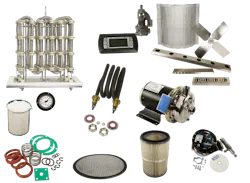
Plastics Machinery & Manufacturing spent the past month exploring one of the most consequential shifts happening on shop floors right now: the transformation of maintenance from a reactive, break-fix chore into a data-driven, AI-assisted competitive advantage. Seven stories. Multiple industry voices. One clear message — the plants that figure this out first will be harder to catch.
Here's your guide to the full package.
The big picture: AI is redefining what maintenance even means
The series kicks off with a cover story that sets the stakes. Senior Reporter Karen Hanna reports that artificial intelligence can now do in seconds what used to take days — taking a vague symptom like "the conveyor motor on Line 3 is running hot" and converting it into a structured work order with the fault categorized, historical failures surfaced and spare parts flagged, all before a technician has even reached for a wrench.
OEMs including Engel, Milacron, Absolute Haitian, Bekum, ACS Group and Wittmann weigh in on the tools they're deploying — from Engel's iQ suite to Absolute Haitian's HT Diagnose and Wittmann's forthcoming Aim4Help portal. The bottom line from IBM AI expert Vrunda Gadesha: manufacturers have a few years to get moving before AI maintenance becomes table stakes rather than a differentiator. Companies that start small — picking one production area to experiment with — are already building an edge.
Read it: How AI is redefining maintenance procedures for plastics processors
From reactive to predictive: Understanding the spectrum
A companion deep-dive traces the full arc of how maintenance thinking has evolved. The old "run till it breaks" model has a price tag: according to research cited in the piece, fully loaded reactive maintenance costs nearly five times more than the same intervention done on a plan. The middle path — calendar-based preventive maintenance — has its own inefficiencies, often resulting in over-maintenance that throws away functional parts.
The smarter approach is condition-based monitoring, which uses sensor readings on variables like vibration, temperature and pressure to trigger work orders when machines actually need attention, not because six months have passed on a calendar. Beyond that lies full predictive maintenance, which uses machine learning models to forecast failures weeks out, allowing repairs to be scheduled during planned production lulls.
OEMs from Conair and Bekum to Engel and Milacron describe how they're equipping customers to make this transition — and why workforce shortages are accelerating demand for the connected tools that make it possible.
Read it: 'Run till it breaks' gives way to predictive maintenance approaches
Editor's take: The window to get ahead is closing
PMM Editor Emeritus Ron Shinn, who has covered the plastics industry for more than 35 years, offers a candid assessment: manufacturers who were rolling their eyes at AI talk at K 2025 are going to find themselves in an awkward position when the industry gathers at NPE 2027. Engel's debut of its Inject AI system — the first autonomous, self-regulating injection molding cell — signals a direction of travel that the rest of the equipment world will follow.
Shinn acknowledges that the plastics industry has historically lagged other manufacturing sectors in adopting major technology shifts. But predictive maintenance, he argues, is the on-ramp that makes the most sense for processors just beginning their AI journey — the data is already there in most machines, the ROI is quantifiable and the labor shortage problem it helps solve is very real.
Read it: AI features offer competitive edge: Talking Points
Repair, replace or retrofit? How processors are making the call
When the machines themselves are aging, the maintenance conversation shifts to a bigger question: is it worth pouring money into equipment that's 20 or 30 years old? Hanna digs into that calculus with OEM representatives who are seeing a clear trend — customers increasingly prefer modernization and retrofit programs over full replacement.
High upfront costs, tariff uncertainty and unused capacity are all keeping processors from writing checks for new equipment. But that doesn't mean doing nothing. Engel, Bekum, ACS Group and others describe retrofit programs that can bring aging machines up to modern standards on controls, connectivity and energy efficiency without the price tag of a new press. The key framework emerging: stop thinking about equipment in binary terms. As Engel's Kyle Kluttz puts it, the decision is no longer repair versus replace but part of a "staged lifecycle strategy — maintenance, retrofit, refurbishment and modernization or new investment."
Read it: Plastics equipment owners must decide: Repair, replace or retrofit?
The house call is back: OEMs step up on-site service
One of the more human stories in the package looks at how OEMs are filling the gap left by thinning maintenance departments. Bay Plastics Machinery is expanding its on-the-road repair service, sending vans to customers' facilities to sharpen pelletizer rotors and deliver components. Conair, Absolute Haitian, Nissei America, Engel and Milacron all describe structured preventive maintenance programs that put their technicians on the shop floor, alongside customers' workers.
The story also features Bert Banaszak, who runs three Pirtek hydraulic hose franchises and is candid about what he sees: plants running on shoestring maintenance budgets, a generation of workers who have no interest in hydraulic systems and the occasional job that starts at 3 a.m. because a line can't be allowed to stay down. "Nothing's changed in 60 years of hydraulic service," he says — it's finding people who know what to do when something fails that's gotten harder.
Read it: On-site maintenance services gain traction as plastics processors tackle downtime, labor gaps
The mold is part of the maintenance equation, too
Jeff Klabunde, VP of operations at Hoffer Plastics, contributes a practitioner's perspective on tooling maintenance that stands on its own as a guide for injection molders. The central argument: poorly maintained molds commonly lose roughly 5 percent of their performance annually through longer cycle times, increased variability and rising scrap rates — and that compounds. Deferring replacement tooling that might cost more than $400,000 is achievable, but only through disciplined, cycle-based maintenance programs rather than calendar-driven ones.
Klabunde makes the case for data-driven maintenance documentation, skilled mold technicians who can interpret subtle wear patterns before they become failures and a spare parts strategy that keeps critical components on the shelf ready to install. The piece is a useful counterpoint to the machine-level AI discussion in the rest of the series — a reminder that the fundamentals of disciplined upkeep are the foundation on which any smart-factory overlay has to be built.
Read it: Preventive tooling maintenance as a competitive advantage
Five things you can do right now
The series closes with a practical tip sheet for processors who want to start improving their maintenance approach today. Conair's Jerry Fleming and Milacron's Scott Mason, among others, offer actionable guidance: identify the parts of your plant most vulnerable to dusty air, poor water quality or moisture; consult your OEM's checklists and maintenance resources; establish performance baselines before problems develop; and start using data — even the data already flowing from existing sensors — to shift from reacting to anticipating.
The piece is short but direct, and it's a good starting point for shops that feel overwhelmed by the broader transformation the series describes.
Read it: Tips to streamline your shop upkeep
The through-line
What connects all seven pieces is a simple idea: maintenance in plastics processing is no longer just about keeping equipment from breaking. It's about data, planning, workforce strategy, capital allocation and competitive positioning. OEMs are evolving their service models to match. AI tools are making it possible for smaller, less experienced teams to do more. And the cost of waiting — whether measured in unplanned downtime, emergency repair bills or obsolete tooling — keeps climbing.
The window to get ahead of this shift is open. For now.