Preventive tooling maintenance as a competitive advantage
Key Highlights
- Disciplined preventive maintenance reduces unplanned downtime, stabilizes processes and ensures consistent, in-spec part quality across production runs.
- Cycle-based, tool-specific maintenance programs outperform calendar approaches, enabling earlier detection of wear and preventing performance degradation.
- Data-driven maintenance systems track tool history, identify root causes and optimize intervention timing to reduce recurring issues.
- Skilled mold technicians remain critical, interpreting subtle wear patterns and making proactive repair decisions before failures occur.
- Proactive maintenance lowers total cost of ownership, avoiding emergency repairs, lost capacity and premature tooling replacement exceeding $400,000.
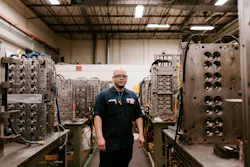
By Jeff Klabunde
As OEMs face increasing pressure around delivery, quality consistency and cost control, mold performance has a direct impact on supply continuity and total program cost. While most facilities have preventive mold maintenance programs in place, the rigor and consistency behind them determine whether maintenance mitigates risk or reacts after failure.
A disciplined preventive maintenance approach moves beyond routine upkeep. When executed with structure, data-driven insight and technical precision, it becomes a system for managing risk, improving reliability and controlling long-term cost. It shifts mold maintenance from a necessary function into a measurable contributor to performance.
Why maintenance discipline matters
In injection molding environments, preventive mold maintenance protocols exist on paper but can be deferred to meet production and delivery demands. As schedules tighten, molds remain in the press longer than intended. Maintenance gets delayed until there is a visible issue, a part quality concern or a breakdown severe enough to force action. By then, variations in part quality and process performance already are developing.
A disciplined preventive maintenance program operates differently. When a mold reaches its maintenance threshold, it comes out of production. Period. That kind of non-negotiable approach is important because the cost of delay is rarely limited to a single repair. Skipped or deferred maintenance increases the likelihood of poor quality parts, unplanned downtime, emergency intervention and, in the worst case, significant damage that shortens mold life.
Skipping routine maintenance introduces cumulative risk. In tooling, that risk escalates quickly. A mold is a production-critical asset tied directly to operations, on-time delivery and product quality. When a mold runs in a degraded state, issues compound, driving higher repair costs, operational disruption and increased risk of failure. Proactive mold maintenance keeps tools producing consistent, in-spec parts over time while avoiding unplanned downtime and the need for emergency intervention.
Maintenance discipline reduces downtime and variability
Unplanned downtime remains one of the most expensive and disruptive risks in injection molding. A worn alignment component, fatigue in a moving part, vent blockage or hidden steel wear can quickly take a mold out of service and disrupt production.
Preventive maintenance is widely practiced, but the level of discipline can vary. When maintenance is not structured and methodical, issues are addressed too late and variability increases. This often appears as increased process adjustments, tighter operating windows and greater difficulty maintaining consistent part quality.
A proactive program is not solely calendar-driven but should also be cycle-based, tool-specific and standardized. Maintenance intervals are defined by tool-specific conditions such as resin, cavitation and performance history, while work is structured into defined tiers with clear scope. Consistent removal criteria ensures maintenance is applied predictably rather than reactively.
Downtime rarely starts with a sudden failure. It might begin as gradual wear in vents, alignment components or parting surfaces that develops over time. Preventive maintenance reduces this risk by addressing concerns early and removing molds at defined intervals, allowing maintenance to be performed under controlled conditions. As molds age, intervals should be adjusted to maintain stability and prevent compounding issues.
Maintaining quality and high-volume performance
One of the clearest differences between routine preventive maintenance and a disciplined program is depth. In high-performing manufacturing operations, maintenance is designed to expose conditions that are not visible during production. Many damaging conditions do not reveal themselves on-press. Alignment shifts, gate erosion, vent degradation and surface wear develop gradually, leading to dimensional variation, cosmetic defects and increased scrap if left unaddressed.
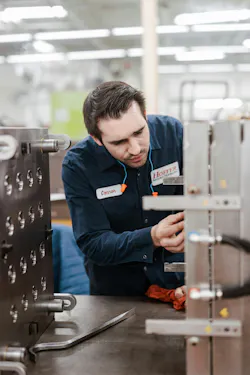
A disciplined preventive mold maintenance process is built around thorough inspection, measurement and restoration. Critical features, including alignment surfaces, shutoffs, vents and part-contact steel, are evaluated and returned to specification, with worn components replaced before failure to maintain consistent performance. Inspection is focused not only on visible damage, but on early indicators such as fatigue, wear patterns that signal future failure and washout or erosion that can impact part quality.
How maintenance is performed is equally critical. It must be performed with care to ensure components are properly aligned, fitted and restored without introducing new sources of variability. Molds are then re-validated before returning to production to confirm they are capable of consistent, repeatable output. This step ensures that issues have been fully resolved and no new conditions were introduced during maintenance.
Together, this process serves as a performance reset. When cavities underperform, preventive maintenance provides the opportunity to correct those conditions and return the tool to its intended output and performance standards.
Using data and process feedback to drive preventive action
Mature preventive maintenance programs are driven by documented data, not just schedules. Some programs document what was repaired, but fewer use that information to identify root causes. This distinction determines whether issues recur or are resolved at their source.
Maintenance is most effective when it is managed as a data-driven process. Each maintenance event is documented and tied to a specific mold, creating a history of performance, repairs and wear patterns. Over time, this reveals recurring issues, component life cycles and likely degradation points, allowing teams to adjust maintenance timing and prioritize corrective actions more effectively.
Process feedback from the production floor further strengthens this approach. Molds rarely fail without warning, and early indicators appear in both the process and the molded parts before they are detected in the toolroom. Changes in cycle time, fill balance, flash or part appearance signal developing wear. When these signals are captured and communicated, maintenance can be planned before performance degrades.
Establishing a feedback loop between production, quality and the toolroom ensures these signals are translated into timely preventive action. This enables faster diagnosis, more effective prioritization and earlier intervention, reducing the likelihood of unplanned downtime and preventing issues from escalating.
Mold technician expertise drives maintenance outcomes
Even the most structured maintenance systems depend on the expertise of the people executing them. Processes and checklists provide consistency, but they do not replace the ability to interpret wear conditions, understand mold behavior under production and make informed repair decisions.
Many conditions identified during maintenance are not clearly out of specification. The challenge is not just detecting wear but determining its significance. Subtle changes in surfaces, alignment or performance may already be influencing part quality or process consistency, even if they fall within tolerance.
Skilled technicians bring the expertise required to interpret these conditions, supported by detailed maintenance documentation that provides visibility into prior repairs, wear patterns and tool history. They recognize patterns across maintenance events, understand how wear will progress and make informed decisions on when action is necessary. This includes determining whether a component can continue to run, requires adjustment or should be replaced before it impacts production.
This level of expertise enables earlier, more targeted response and reduces the likelihood of defects, downtime and more extensive damage. Without it, maintenance becomes reactive, relying on visible damage or threshold-based inspection that often occurs too late.
Technical skill remains a key differentiator in maintenance outcomes, particularly in complex or high-cavitation tooling where small issues can quickly scale into production-level problems.
Eliminating delays and risk through proactive maintenance support
Maintenance effectiveness depends not only on process, but on how well an operation can respond when maintenance is needed. In many cases, the difference between a controlled maintenance event and extended downtime comes down to how prepared the operation is to execute quickly and effectively.

A critical component of that readiness is a defined spare parts strategy. Well-prepared toolrooms maintain an inventory of critical wear components such as leader pins, bushings, inserts and slides, often pre-machined and ready for installation. This allows worn elements to be replaced immediately rather than repaired under time pressure, reducing maintenance duration and enabling a faster return to production.
Without this level of preparation, delays in sourcing or machining components can extend downtime and increase operational risk. Running worn or misaligned components further accelerates damage to critical mold features, making timely replacement essential.
Internal repair capabilities further strengthen this approach. Operations with in-house tooling resources can act immediately when maintenance is required, avoiding the delays, handling risks and extended downtime associated with shipping molds to external partners.
In high-wear applications, redundancy strategies such as maintaining backup or duplicate molds are often justified for critical programs. While this requires additional investment, it allows production to continue during maintenance, ensuring the line is not down for extended periods. Organizations that invest in this level of preparedness are better positioned to minimize downtime, protect part quality and maintain consistent production performance.
Cost of preventive vs. reactive maintenance
Poorly maintained molds commonly experience performance degradation of approximately 5 percent annually, driven by longer cycle times, reduced cavitation and increased variability. This loss in efficiency compounds across production, translating into tens of thousands of dollars in added annual cost and sustained six-figure cost increases over the life of a program through lost capacity, higher cost per part and upward pricing pressure.
This impact follows a predictable progression. Minor wear develops into dimensional variation and process instability, which can escalate into unplanned downtime or tool failure. Each stage introduces additional cost, complexity and risk.
Delayed maintenance is often the most expensive form of maintenance, not because of the repair itself, but because of when it occurs. As wear progresses unchecked, issues expand beyond localized repair and begin to affect tool integrity, production performance and part quality. In many cases, this accelerates the need for major repair or full tool replacement.
Extending mold life through preventive maintenance can defer or eliminate replacement tooling often exceeding $400,000, representing significant capital cost avoidance over the life of a program.
Reactive repair further compounds these costs. Quality issues may require rework or containment, while production losses reduce press utilization, labor efficiency and overall throughput. Emergency repairs increase costs through expedited labor, premium freight and compressed decision-making, often resulting in missed deliveries.
Proactive maintenance interrupts this cycle by shifting work into a controlled and predictable environment. It avoids the performance losses, escalating repair costs and premature tool replacement that drive tens of thousands of dollars in added annual cost and six-figure impacts over the life of a program, preserving asset value and avoiding significant capital reinvestment. When done right, preventive maintenance is a defining competitive advantage that controls and eliminates unnecessary costs, protects performance and maximizes asset value.
About the Author
Jeff Klabunde
Jeff Klabunde is VP of operations for Hoffer Plastics, a custom injection molding shop in South Elgin, Ill.