Zebra vision systems include conventional and AI tools
Key Highlights
-
Zebra’s AI-powered machine vision systems identify recurring defects, monitor tooling wear and detect material remaining in molds to reduce scrap.
-
AI inspection recognizes variations in defect size, appearance and location that conventional rules-based vision systems may struggle to identify.
-
Zebra offers 2D cameras and 3D sensors for inspecting molded parts, with technology selection depending on application requirements and production conditions.
-
Vision systems can classify defects and suggest possible causes, moving plastics manufacturers closer to autonomous injection molding and production.
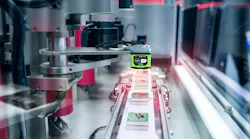
Zebra Technologies’ AI-powered machine vision systems can help plastics processors improve the quality of molded parts and reduce scrap by identifying recurring quality problems, said Robb Robles, director of machine vision product development.
Vision systems can also help plastics processors monitor tooling wear and detect whether any material remains in a mold after parts are ejected.
“Because that’s going to cause a problem on the next shot,” Robles said.
As artificial intelligence improves, vision inspection systems can better identify defects that are difficult to describe with traditional rules-based training methods. Identifying defects in injection molding can be challenging using rules-based technology because defects can vary in appearance.
Zebra Technologies inspection software includes both AI and conventional rules-based tools. Conventional vision tools work well when an inspection requirement can be expressed through defined parameters, such as measuring the distance between two edges or confirming that a part’s dimensions fall within a specified tolerance. AI is useful when a defect is recognizable to an experienced human inspector but difficult to describe in precise mathematical terms, Robles said.
Training a vision inspection system with examples of defects allows AI software to recognize similar but slightly different defects. Examples would be defects in a different location or of a different size.
“AI is enabling much better quality of injection molded plastic parts because it’s able to recognize defects based on a handful of examples that you’ve shown it, that you’ve trained it on, but it’s never actually seen those specific defects before,” Robles said.
Technologies cover multiple use cases
Zebra offers a variety of vision inspection systems because there is no “one-size-fits-all” technology, he said. The appropriate solution depends on factors including a part’s geometry, color, size, surface characteristics, inspection requirements and production speed, he said. Some applications can be handled by a relatively simple 2D camera, while others require 3D imaging, sometimes with more powerful PC-based AI processing.
Some of Zebra’s technologies include:
- NS42 Smart Vision Sensor: All-in-one vision sensor for 2D inspections. It incorporates lighting, the imager and the processor. Software is incorporated into the vision sensor without the need for an external PC after the initial setup. 2D vision systems are useful for surface-defect detection, identifying features, reading part numbers and other applications that can be performed using image processing. It can be sufficient for relatively straightforward inspection tasks. It includes Aurora Focus software, described on the company’s website as an intuitive platform that makes it easy to set up, deploy, and run the NS42.
- 3S Series High-Resolution 3D Sensors: Uses structured light technology for 3D scanning with sub-millimeter resolution. Every 3S Series model is bundled with Aurora Design Assistant software, according to the company’s website. The 3S series handles challenging applications and can inspect parts even if they are high-gloss, translucent or transparent, according to the company. By capturing a large surface, it is useful for inspecting large parts that would be difficult to inspect with a laser profiler.
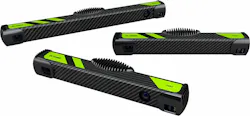
- AltiZ Series High-Fidelity 3D Profile Sensors: High-speed 3D profile sensors that feature single-camera or dual-camera single-laser designs that minimize scanning gaps. The laser profiler offers a smaller field of view than other sensors but with high accuracy, Robles said. 3D laser profiling is useful when high measurement accuracy or depth information is needed, including inspecting cavities, recessed features or parts with complex geometries. Aurora Design Assistant is listed among the features. Aurora Vision Studio software is an option aimed at meeting the needs of computer vision engineers, Robles said.
Zebra Technologies vision inspection systems can examine molded parts for a range of defects including short shots, jetting, flash, visible surface voids, warpage, shrinkage, and other surface irregularities that could interfere with assembly or product performance, Robles said.
The systems can be placed at various points on a line depending on what it is being asked to do, such as inspection, measurement or robotic guidance. It could be placed in front of a mold to inspect it, or far from the IMM to measure cooled parts passing on a conveyor.
Moving toward autonomous production
Vision systems today can not only alert an operator to part defects but help classify the defects, Robles said. The systems can be trained to recognize that every time it has seen a particular defect, it has been told by humans what caused the defect, and it can relay a possible cause to the operator.
The eventual goal for many is allowing vision inspection systems to self-correct the injection molding process to eliminate defects.
“That’s ultimately where the industry is going,” Robles said. “The fantasy is kind of a lights-out factory. Just turn the lights out, and everything is completely automated. There might be some processes where that’s possible. I don’t know. I think that’s still a way in the future for just about everything I can think of, but you want to get closer and closer and closer.”
The AI software is not yet at the point where it is that smart, he said.
Contact:
Zebra Technologies, Lincolnshire, Ill., 847-634-6700, www.zebra.com
About the Author
Bruce Geiselman
Lead Reporter
Senior Reporter Bruce Geiselman covers plastics processing technologies and end markets including automotive and packaging. He also writes features, including In Other Words and Problem Solved, for Plastics Machinery & Manufacturing and The Journal of Blow Molding. He has decades of experience in daily and magazine journalism, including eight years at PMM, and is the recipient of a Jesse H. Neal Award, among other recognitions.