The art and science of manufacturing high-performance plastic tubing
Key Highlights
-
High-performance tubing requires careful material selection based on flexibility, chemical resistance, pressure, biocompatibility and other application requirements.
-
Extrusion process controls influence tubing dimensions, surface finish and consistency, with temperature, pressure, speed and cooling working together.
-
Precisely aligned tooling helps control inner and outer diameters, wall thickness and complex geometries during tubing extrusion.
-
Continuous improvement, quality control and standards such as ISO 13485 support consistent tubing production for high-stakes applications.
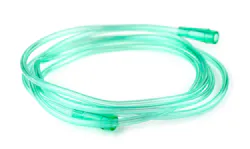
From the medical field to food and beverage applications, high-performance tubing is often responsible for delivering functionality, reliability, and most importantly, end-user safety. But manufacturing high-end tubing products doesn’t come easy, and not just any extrusion house can meet the exacting specifications that are so important to applications where health, safety and even life might be on the line.
High-performance extrusion is defined by the process discipline and expertise that surround it. Optimal material selection, precise technique and control during the extrusion process, and ongoing quality control measures all influence the accuracy and consistency of the finished product. With all of this in mind, it’s worth investigating the details of what goes into the production of high-performance tubing. Let’s explore:
Matching desired functionality with material choice
Before the extrusion process begins, it’s important to establish the desired parameters and design conditions for the application. The application specifier (for example, the producer of a specific piece of medical equipment) and the tubing supplier (often a contract manufacturer) work together to make these decisions.
The involved parties collaborate on this process by asking some upfront questions. For example: Does the tube need to remain flexible for mobility? Does it need to be highly resistant to chemical degradation? Will the tube operate under high pressures? Will it be exposed to skin or internal tissues? The answers to these questions can dictate both material selection for the tube and the design parameters leveraged when it comes time to manufacture the product.
Manufacturers can produce extruded tubing from a variety of materials ranging from PVC, silicone, polypropylene and polyethylene to thermoplastic elastomers (TPE), including thermoplastic polyurethane (TPU) and thermoplastic vulcanizate (TPV). The best material for the application will depend on end-use requirements.
For example, tubing used in the medical industry may require several specific performance characteristics, including durometer (or hardness), clarity, kink resistance, torque strength, biocompatibility, chemical resistance and more. In such applications, TPE is often chosen for its ability to satisfy end-use requirements across this spectrum.
Additionally, high-quality, specialized TPE can deliver optimal resistance to heat or chemicals while demonstrating excellent elasticity, flexibility and elongation performance. Finally, TPE offers low leachables and extractables characteristics — meaning the tubing material will not leach into fluids inside — making it ideal for biopharmaceutical and medical applications.
Elsewhere, PVC is a popular tubing material choice due to its cost-effectiveness and versatility across a variety of applications. It is lightweight and offers manufacturing flexibility and easy workability, making it a good choice for general fluid transfer applications in both the medical and food service markets. It lends itself to solvent bonding for simplified assembly or manufacture. It also offers good resistance to tearing and chemical exposure.
Dialing in the extrusion process
Once the material and product requirements are established, the manufacturer must control the extrusion process to meet the agreed visual and dimensional specifications. The customer defines those specifications based on the requirements of the intended application; the tubing manufacturer’s responsibility is to produce consistently to those agreed-upon characteristics.
Every stage of extrusion contributes to the quality of the finished tubing. Material temperatures, extrusion pressure, line speed, tooling geometry, cooling conditions, cutting operations and final winding or spooling must all work together as a controlled system. A change in one variable can influence several others. Increasing line speed, for example, can affect tubing dimensions and limit the amount of time the material can cool before downstream handling. Likewise, fluctuations in raw material melt temperature or extrusion pressure can translate into variations in diameter, wall thickness or surface appearance.
These process controls are partly responsible for delivering key characteristics of the finished tubing, including its inner diameter (ID), outer diameter (OD), wall thickness and length, as well as consistent shaping and surface finish. Maintaining those dimensions consistently throughout a production run can be particularly important when tubing must connect with another component, fit over a barb or fitting, pass through an assembly or maintain a specified fluid pathway.
Achieving that consistency starts at the extrusion head. Tooling such as the die, which helps establish the tubing's outer geometry, and the pin or mandrel, which helps form its inner diameter, must be appropriately designed and precisely aligned. Standard tooling may be sufficient for relatively straightforward tubing geometries, while custom-designed pins, dies and other tooling can be advantageous for applications with particularly tight dimensional requirements or geometries that cannot be satisfied with off-the-shelf tubing.

The extrusion conditions surrounding that tooling are equally important. Temperature must be controlled across the material-processing zones, so the polymer reaches the appropriate viscosity and flows evenly through the die. Temperatures that are too high or too low can contribute to processing instability, dimensional variation, surface defects or material degradation.
Cooling is another critical part of dimensional control. As the newly formed tubing exits the die, it is still hot and susceptible to deformation, and cooling is often performed by submerging the tube in a temperature-controlled bath. Controlled cooling allows the tube to solidify while retaining the intended shape and dimensions.
The cooling rate, bath temperature, and distance between the die and cooling system can all influence the final product. For flexible materials in particular, careful handling is important to prevent the tubing from stretching, flattening or otherwise changing shape before it has sufficiently cooled.
The nature of elastomeric extrusion itself also requires specialized expertise. Equipment and processes optimized for rigid thermoplastic profiles are not necessarily ideal for flexible TPE or PVC tubing. Flexible materials can behave differently as they move through the extruder and downstream equipment, making factors such as material handling, tooling design, puller configuration and winding tension especially important. Accounting for these behaviors and establishing a process that maintains consistency without stretching, compressing or distorting the tubing is critical.
In some applications, coextrusion can be used to combine the characteristics of two or more materials in a single tube. In this process, multiple polymer streams are fed through specially designed tooling so they form a unified, multilayer structure. An external material might be selected for properties such as flexibility or patient contact in a medical application, while an internal layer provides strength, chemical resistance, barrier properties or another functional characteristic. Successful coextrusion requires precise control not only of overall tube dimensions, but also of the thickness, uniformity and adhesion of the individual material layers.
Additional processing considerations may be required to achieve characteristics such as surface appearance and feel. The interaction between material formulation, tooling condition, melt temperature and line speed can influence whether the finished surface is smooth, glossy, matte or free of visible imperfections. In applications where tubing slides against another component, contacts a patient in a medical setting or is readily visible in the finished device, these seemingly cosmetic characteristics may also have functional significance.
Ongoing quality control measures
Knowing the procedures for extruding high-performance tubing is one thing. Sticking to them can be another thing.
For this reason, continuous improvement initiatives are critical to extrusion excellence. Lean practices, for example, which are focused on removing unnecessary processes, excess time and cost from all aspects of production, can be invaluable. On an extrusion line, organization and decluttering can help reduce setup times, streamline changeovers and minimize production errors that can hinder end-use performance. Further, this can be helpful to manage costs and keep pricing competitive. Excellent organization can also help prevent material contamination or cross-mixing caused by poor housekeeping.
Adherence to relevant quality standards can also be critically important, and indicative of extensive quality control practices. For example, ISO 13485 is the medical device industry’s quality management system standard; it helps to ensure that a wide variety of medical devices are manufactured with suitable quality controls.
• • •
Ultimately, high-performance tubing depends on many things going exactly as planned during the manufacturing and extrusion process. Exacting processes, unbending quality control and attention to detail are essential for tubes that contribute to high-stakes end-use applications. For rubber and plastic processors, there’s no room for compromise.
About the Author
Greg Graham
Greg Graham is the senior director of extrusion operations for Kent Elastomer Products Inc. He has more than three decades of experience in the plastics extrusion industry, and maintains Lean Manufacturing Master and Six Sigma Black Belt certifications from the University of Akron.