How to develop technical talent in blow molding operations
Key Highlights
-
Blow molding companies should recruit for mechanical aptitude, electrical skills and problem-solving abilities, then provide structured technical training, says Kyler Ruark, president of Molding Service Group LLC.
-
Building relationships with schools and trade organizations can help attract new workers and introduce students to blow molding careers.
-
Effective technician training combines theory, hands-on experience and repetition, giving employees the confidence to troubleshoot equipment independently.
-
Training videos and troubleshooting guides can preserve veteran technicians’ knowledge and help develop the next generation of blow molding professionals.
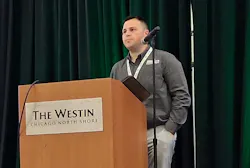
The blow molding industry, facing a shortage of machine operators and technicians, needs to do a better job of developing new talent, Kyler Ruark, president of Molding Service Group LLC, said during the SPE Annual Blow Molding Conference in October.
“We need to stop searching for the technicians we wish existed and start building the technicians our industry needs," Ruark said.
A shortage of experienced blow molding machine operators and technicians today is making it difficult for companies to recruit and retain workers, he said.
Ruark delivered a 30-minute presentation at the beginning of the conference in which he outlined strategies for attracting and retaining employees. He also talked about the need to document solutions to difficult problems that veteran technicians have developed over the years.
Recruiting a fresh workforce
While companies once focused exclusively on hiring workers with five to 15 years of blow molding experience, that is becoming increasingly difficult. Blow molding companies are competing for a shrinking pool of experienced candidates.
Ruark recommended developing new talent by recruiting people who may not have blow molding experience, but have related skills and experience such as mechanical aptitude, electrical skills, a strong work ethic and problem-solving abilities.
“It may be more suitable to hire for aptitude and attitude and then provide the structured technical development program,” he said.
Developing relationships with high schools, community colleges, vocational schools and skilled trade organizations could help bring students into the industry. Employers can also make blow molding careers more attractive by explaining the technical skills and experience workers develop involving hydraulics, pneumatics, electrical controls and automation. These aren’t simply “factory jobs,” he said.
“We are not simply offering someone a job, we are offering them the opportunity to become a highly skilled technical professional,” Ruark said.
Effective training is an ongoing effort
Once companies recruit new employees, they need to effectively develop their skills, and Ruark identified three essential elements of technical training: theory, hands-on experience and repetition.
“Training should not end when somebody attends a class,” Ruark said. “The real measurement is whether they can apply what they learn when the machine is down and production is waiting. Blow molding is especially suited to hands-on training.”
It’s important to teach trainees how to identify a problem and determine how to correct it on their own rather than having an experienced technician take over and solve the problem for them. Learning to do the investigation and correction themselves is more effective than trying to remember how someone else did it, he said.
“A technician develops confidence when they understand not only what adjustments to make but why they are making it and what result should be expected,” Ruark said.
Physically “bugging” a machine and making a technician troubleshoot the machine to get it back to normal operation can be an effective training tool, he said.
“The next generation of blow molding professionals is simply not going to appear,” Ruark said. “In my organization, we tend to pair our entry-level technicians with our senior-level technicians as much as possible so that they can absorb the knowledge from the senior technician and build on that.”
Ruark said they give their employees “the tools to try to be successful in building not just a job but have a long-term career. That's one of the things that I've been blessed throughout my career.”
Employees who cannot see opportunities for advancement may look elsewhere for them, he said.
Preserving veterans’ technical knowledge
Recruiting and training new employees is only part of the solution, Ruark said. Making training videos and troubleshooting guides can help preserve technical knowledge industry veterans have learned over the years so it is available to a new generation of workers.
Ruark said he benefited early in his career from working with OEM technicians who had accumulated 40 or more years of experience in the industry. That type of knowledge transfer has become less common, he said.
“We have to share that knowledge with each other to help build that next generation,” he said.
Molding Service Group, Ruark’s company, provides blow molding machine repairs, retrofits and rebuilds for blow molding machines from manufacturers including Uniloy, Bekum, Rocheleau and R&B Plastics Machinery. They also provide hands-on training for operators and maintenance technicians, Ruark said.
“Our goal is to help blow molders develop the technical skills within their teams to keep equipment running safely and efficiently,” he said.
Contact:
Molding Service Group, Stout, Ohio, 937-779-9000
Further reading on workforce development
 Injection molding machines for medical manufacturing in a clean room.

 dreamstime_m_353568432
About the Author
Bruce Geiselman
Lead Reporter
Senior Reporter Bruce Geiselman covers plastics processing technologies and end markets including automotive and packaging. He also writes features, including In Other Words and Problem Solved, for Plastics Machinery & Manufacturing and The Journal of Blow Molding. He has decades of experience in daily and magazine journalism, including eight years at PMM, and is the recipient of a Jesse H. Neal Award, among other recognitions.