Plastics machinery shipments rose in Q4 2025
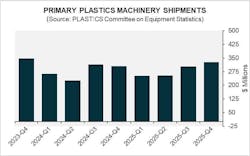
North American primary plastics machinery shipments rose in the fourth quarter of 2025, up 7.8 percent from the third quarter and 7 percent year-over-year, according to the Committee on Equipment Statistics (CES) of the Plastics Industry Association (PLASTICS).
The total shipment value of injection molding and extrusion equipment was estimated at $327 million and represented the third straight quarterly increase.
Shipments of single-screw extruders and injection molding machines rose 15.5 percent and 8.7 percent, respectively, quarter over quarter, while twin-screw extruders fell 8.2 percent. Year-over-year, single-screw extruders increased 14.5 percent and injection molding machines rose 7 percent, while twin-screw extruder shipments remained flat.
The figures are in step with the U.S. macroeconomy, which managed to grow in 2025 despite tariff headwinds, the association reported.
“Market adjustments across the plastics industry supply chain in response to higher tariffs appear to have helped deter further deterioration during what has been a soft plastics manufacturing year,” said Perc Pineda, PLASTICS’ chief economist.
Processors who responded to Plastics Machinery & Manufacturing’s annual survey, conducted in October 2025, reported strong interest in buying new equipment in 2026, but concerns about tariffs and other economic issues threatened to hold them back.
Companies and analysts in the plastics industry have expressed frustration at volatile trade policies that have complicated doing business while not necessarily achieving the intended effect of helping U.S. manufacturers.
On U.S. plastics machinery trade, the customs value of imports reached $3.5 billion in 2025, up 1.8 percent, while calculated duties surged 179 percent, to $374 million. Exports fell 10.5 percent to $1 billion, increasing the trade deficit in plastics machinery 7.8 percent.
Respondents to the CES fourth-quarter survey were less pessimistic about market conditions. The share anticipating deterioration in the next quarter dropped from 48 percent to 13 percent, while those expecting conditions to remain steady or improve over the next 12 months rose from 58 percent to 83 percent.
“The moderate economic growth outlook for 2026 remains unchanged. What may have improved, however, is the prospect that sectors that lagged in previous years — such as construction — could outperform as borrowing costs decline, generating increased demand for plastics and, by extension, plastics equipment,” Pineda said.