Golf club maker Ping tees up success with automation
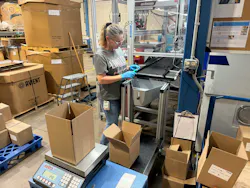
Problem: Repetitive, labor-intensive tasks were boring employees and cutting into productivity for a golf equipment manufacturer.
Solution: Ping has taken a swing at reducing costs and improving morale with automation from Wittmann.
By Karen Hanna
Over his five years at golf equipment maker Ping, senior molding engineer Steve Jeffries has gone from urging management to upgrade machines to watching as visitors ogled a brand-new Wittmann injection molding machine working in tandem with a robot.
Later this year, he’ll watch as one more robot — maybe the last in a series of upgrades he’s initiated — takes its place on the plant floor.
With help from Wittmann, Ping is defending its turf on the cutting edge.
Jeffries said he’s pleased by the transformation he’s witnessed across the company’s Phoenix campus, where around 1,000 employees assemble golf clubs and bags.
“We needed newer technology; we needed automation. ... There's just a lot we needed. So, that's what we've been doing in the last five years is upgrading and installing automation,” he said.
Technological awakening
With a long career at various injection molding plants, Jeffries was quick to identify areas of potential improvement when he came aboard at Ping. One clue was employees’ approach to work.
The vast amount of Ping’s work involves assembling components manufactured overseas to produce custom-fit clubs. But about a dozen people work in a separate building set aside for molding plastic parts.
“They were doing things that literally almost put them to sleep because it was so routine and so easy, and now they're actually going to be more focused on inspecting parts and doing hand packaging and things like that,” Jeffries said.
When he started at Ping, Jeffries said many of the company’s presses were about 30 years old. Updating and automating became his mission.
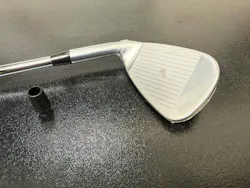
Production of one particular part — a decorative, head-to-shaft transition component called a ferrule — seemed an obvious choice for an upgrade.
While most of Ping’s products require custom work, the ferrule is unique in that it has a standard design, making it the Phoenix campus’ highest-volume part.
But manufacturing it required a lot of labor.
Ping turned to Wittmann, which has been a company partner for decades.
“Wittmann’s sales representative assisted us in specifying that machine, along with our other equipment. After conducting a detailed analysis of our product mix, I identified the optimal press sizes for our operations. At the time, our presses were oversized, with shot sizes and tonnage exceeding our requirements,” Jeffries said when he was interviewed for a Wittmann newsletter article about Ping's automation transformation.
In a discussion with Plastics Machinery & Manufacturing (PMM), Jeffries called the final design for the new ferrule production cell a “showpiece.”
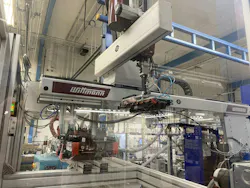
Installed about three years ago, the cell includes a Wittmann SmartPower 35/130 injection molding machine (IMM), a linear three-axis W808 robot, a Tempro plus D temperature control unit and an S-Max granulator, all run by a B8 controller, according to the Wittmann newsletter article.
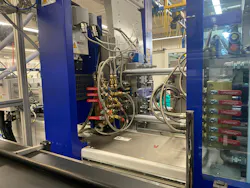
With it, one operator now can run two presses at a time. Ferrule output has doubled, as Ping has been able to implement nearly lights-out production, eliminated a second work shift and transitioned from a mold with four cavities to one with eight.
“Prior to adding this work cell, the parts were hand-trimmed and the runner was scrapped, not reground,” Jeffries said in the newsletter. “The shot-to-shot repeatability is valuable in reducing defective parts. We utilize 40 percent regrind and still get good shot-to-shot accuracy.”
He said other benefits have included “improved process consistency, enhanced automation, greatly reduced operator intervention and increased production efficiency,” along with “improved visibility.”
To ease the transition to a more automated approach, a training expert from Wittmann worked with Ping’s operators for nearly a week to help them get comfortable with the new setup.
“We really wanted a training expert here because we have early-career maintenance technicians, and it’s hard to find technicians who know this type of equipment,” Jeffries said.
The line “is a clear example of finding exactly the right fit for an automated molding cell — a situation in which a number of efficiencies can be realized the minute the switch is flipped,” Edgar Sanchez, Wittmann’s western regional sales director for injection molding machines and automation, said in his company’s newsletter.
Cutting down on waste
The inclusion of a granulator in the ferrule production cell is an example of another way Ping is improving.
Previously, Jeffries said, the company — which runs a diverse array of materials, including PP, acrylonitrile butadiene styrene (ABS) and nylons, totaling approximately 60,000 pounds a year — just trashed its scrap.
Now, it’s reusing it.
“One thing that we've added is we were running 100 percent virgin material, which means all of our scrap that we were creating, we were literally throwing in a dumpster. So I put in granulators at every machine, and we're reusing all of our regrind now,” said Jeffries, who noted that’s better for both the environment and the company’s bottom line.
Hitting the back nine
While Jeffries is proud of Ping’s upgrades, one last project still was being finalized when he spoke to PMM in June.
He said he was anticipating that Ping would take delivery later in the year of another new production cell, with a 120-ton press from Wittman set to replace one of the aging IMMs still left on its roster of nine machines.
Like the SmartPower 35/130, the newest setup includes a multi-axis robot, ready to take on a task that has begged for automation.
Jeffries explained that Ping makes golf heads in about 30 weights, using different material blends to create clubs with swing weights tailored to the golfer.
While the weights vary, the process doesn’t, and the parts are made in batches.
But making the parts requires a bunch of steps, as Jeffries explained.
“We also have a decorative part that goes on the outside of this, so these decorative parts have to be insert-molded into the mold and overmolded,” he said.
With automation set to take over, Jeffries said, “Instead of having the operator open the press, insert the part, insert the decorative part, and then overmold, we're having the robot do all that, and they'll just deliver the parts directly to the operator, where the operator can focus more on cleaning the parts up and packaging them.”
He said he thinks the automation will boost productivity by 30 to 40 percent.
But the company’s not looking to replace workers, he said — it just wants them to do higher-value work.
That transformation has energized the plant, with tours visiting regularly to see how golf clubs are made and, Jeffries said, admire the automation that has set a new par for the company’s course.
“Ping also takes very good care of their employees, so they're not trying to replace employees with robots; they're trying to install robots where it makes sense, where people are doing repetitive-type things that don't require any skill,” he said.
Contact:
Wittmann, Torrington, Conn., 860-496-9603, www.wittmann-group.com
About the Author
Karen Hanna
Senior Staff Reporter
Senior Staff Reporter Karen Hanna covers injection molding, molds and tooling, processors, workforce and other topics, and writes features including In Other Words and Problem Solved for Plastics Machinery & Manufacturing, Plastics Recycling and The Journal of Blow Molding. She has more than 15 years of experience in daily and magazine journalism.