Of all the states of matter — plasma, gas, solid and liquid — plasma might be the least familiar to people. But, capturing lightning in a bottle isn't just a figure of speech for some surface-treatment makers; it's pretty much what they do.
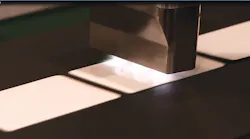
Plasma is created when sufficient energy, such as electricity, comes into contact with a gas, freeing electrons from the atoms and molecules in the gas. With a burst of plasma, manufacturers can prepare the surfaces of plastic parts for joining, gluing, painting or other post-processing steps. Among companies that have recently launched or upgraded products are Enercon and 3DT.
3DT
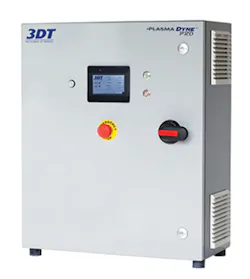
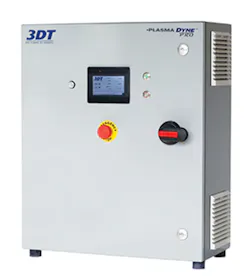
3DT has replaced its PlasmaDyne system with the PlasmaDyne Pro. The plasma-treatment system performs two tasks at once: It cleans contaminants from the surface of parts and modifies the molecular structure of parts' surfaces, so they can be better bonded to other parts, or to media, such as paint. It produces plasma from a high-voltage electrical current within a treating head.
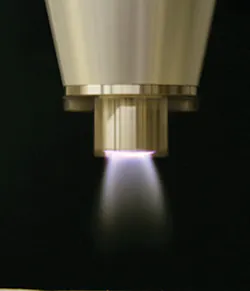
As standard, the new systems come with either one or two treating heads, controlled through either an HMI or a remote interface. On units with more than one head, the heads operate independently, allowing users to apply different power levels to different areas of parts. Machines can be customized with as many as 12 heads.
Three styles of heads, made for treatment widths from 12mm to 40mm, are available for the PlasmaDyne Pro. To switch between jobs, users merely unscrew the nozzle end of the treating head.
For further versatility, the equipment offers a range of power, from 300 watts to 600 watts.
"The adjustable power level provides reduced power for sensitive or thinner plastic materials and higher levels for stubborn, media-resistant plastics, such as polypropylene, recycled plastics and plastics with talc or other fillers," marketing manager Gaye Kiel said. She said it's appropriate for treating small areas, such as the crevices in lids, housings in headlights and mirrors and bottle caps.
To conserve energy and cut costs, the Plasma-Dyne Pro employs active power correction that ensures the generator runs at peak efficiency. It comes with a color touch-screen interface that monitors all parameters and a modular power supply that allows for quick, easy changes.
Standard systems, measuring 22 inches by 26 inches by 10.5 inches, include a cabinet generator, transformer and an internal air supply.
ENERCON
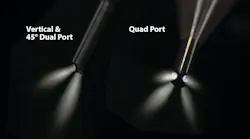
Surface-treatment specialist Enercon has introduced a new Blown-ion 500 plasma treater featuring new MultiPort technology.
According to Marketing VP Mark Plantier, the treatment head is wider and slightly larger.
With the MultiPort technology, the system can treat areas as wide as 2 inches — four times bigger than the original, single-head system. It is effective on all types of plastics.
"It delivers an ion-rich curtain of plastic with a high-speed discharge that cleans, etches and functionalizes surfaces," Sales VP Ryan Schuelke says in a video about the MultiPort, which he calls a "breakthrough technology."
Plantier said the plasma treaters are effective at high processing speeds and can be used alongside conveyors, indexing systems and robotics. The systems come with an easy-to-use 7-inch touch-screen interface and can even be operated remotely.
Karen Hanna, copy editor
Contact:
3DT LLC, Germantown, Wis., 262-253-6700, www.3dtllc.com
Enercon Industries Corp.,
Menomonee Falls, Wis., 262-255-6070,www.enerconind.com
About the Author
Karen Hanna
Senior Staff Reporter
Former Senior Staff Reporter Karen Hanna covered injection molding, molds and tooling, processors, workforce and other topics, and features including In Other Words and Problem Solved for Plastics Machinery & Manufacturing, Plastics Recycling and The Journal of Blow Molding.