Smart Factory: Securing data
There is one very big caveat with Industry 4.0: data security.
Hackers have gained access to the servers of major corporations, political parties and government offices, and even disrupted American presidential election campaigns.
Why should customers, or even a company's own directors, trust any type of system tied to the internet?
For starters, it's not clear to what extent "smart" technology needs to be internet-based. And in fact, many — maybe even most — of the smart technologies exhibited at the K show were machine- or factory-based.
The average small- to mid-sized processing shop would generally have little interest in putting its proprietary operating data on the internet.
But some companies, particularly those that operate globally with multiple sites exchanging large amounts of data, reported in interviews that they are planning on communicating data through cloud-based services operated by Microsoft or other vendors. Many already do.
For example, for Kuka Roboter GmbH, Augsburg, Germany, it will be necessary to integrate data from customers via the cloud to fully realize the benefits of Industry 4.0, said Philipp Kremer, plastics segment market manager.
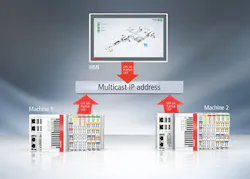
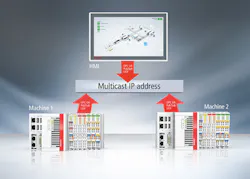
Beckhoff Automation GmbH & Co. KG, Verl, Germany, offers new OPC-UA controllers that analyze customers' processing data through the cloud. The company views PC-based control technology as the foundation for Industry 4.0 and has helped develop extensions that it said make the protocol work more effectively. The advantages of PC-based control include built-in networking capabilities that allow horizontal communication and integration with higher- level systems that can be cloud-based.
In one potential benefit, analysis of huge amounts of data makes it possible to accurately predict machine failures, according to Beckhoff. The machine controller is key because it houses and processes data.
Company representatives interviewed at the K show seemed confident that data is secure.
"Even if hackers gain access to our cloud system, the data will be encrypted and they will have no idea what it is," said Michael Heinzl-reiter, head of marketing and business development at Next Generation Recyclingmaschinen GmbH, Feldkirchen, Austria.
"There are two main concerns with security," said Stefan Zimmerman, security expert for VDMA. "First is: Who even owns the data? The customer or the manufacturer? The second is to identify and manage the risk."
"Confidence of the customer in allowing access to their machine controllers is a very critical issue," said Heinz Gaub, managing director of technology and engineering at Arburg GmbH & Co. KG, Lossburg, Germany. "For a typical injection molding machine shop, their core competency is in their machine data: the set-up data for a tool and for a specific set of parts."
Communicating that data to machine builders would help ensure that parts are consistent while minimizing energy use.
Karlheinz Bourdon, senior VP, Krauss-Maffei Technologies GmbH, Munich, agreed that getting cooperation would be a major step toward achieving a genuinely smart factory.
"We must convince them that their data is truly safe with us," he said.
Six months ago, in response to concerns about security, VDMA staff and partners developed and issued a set of 86 specific recommendations covering topics such as secure software engineering, customer awareness and remote servers. One of the partners was Fraunhofer Institute for Applied and Integrated Security (AISEC) in Munich, which specializes in the development of security technologies that increase the tamper-resistance of IT-based systems. A working group in VDMA studies and tests the security recommendations.
German-language copies of the recommendations are available for free for VDMA members. Zimmerman said at the K show that English versions will be available for purchase by non-VDMA members.
Doug Smock, senior correspondent