Bianco2 suitable for prototyping, production
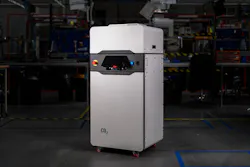
Bianco2 Using carbon dioxide (CO₂) selective-laser-sintering (SLS) laser technology, this Sinterit 3D printer is appropriate for both prototyping and low-volume production, and engineering and medical applications, as well as the manufacture of customized consumer products. Possible parts include orthotics, prosthetics, rehabilitation components, dental applications, wearable products, electronics enclosures, sports equipment, medical tools, automotive and drone components, tooling, jigs and fixtures. Featuring open process control, the printer can handle both traditional technical powders and white, natural or colorable materials, including polyamide (PA), PP and polybutylene terephthalate (PBT).
What’s new? The printer, announced in June. Based in Krakow, Poland, Sinterit has designated Burton Precision as its U.S. distributor.
Benefits Flexibility and scalability. With the Bianco2, users can easily transition from prototyping to low-volume production. The Bianco2 can produce parts that combine high mechanical performance and aesthetics.
Burton Precision Inc., Grand Rapids, Mich., 616-784-1756, https://burtonprecision.com, www.sinterit.com
Vital Statistics
|
Dimensions |
25.6 inches by 23.4 inches by 52.4 inches |
|
Weight |
330.7 pounds |
|
Maximum size of print, measured diagonally |
15.7 inches |
|
Maximum print volume |
About 5.1 inches by 6.7 inches by 13.3 inches |
|
Build speed |
Up to 15mm to 30mm per hour |
|
Maximum power consumption |
1.65 kilowatts (kW) |
About the Author
Karen Hanna
Senior Staff Reporter
Senior Staff Reporter Karen Hanna covers injection molding, molds and tooling, processors, workforce and other topics, and writes features including In Other Words and Problem Solved for Plastics Machinery & Manufacturing, Plastics Recycling and The Journal of Blow Molding. She has more than 15 years of experience in daily and magazine journalism.