Phlox and paradox: Plastic waste sows guilt with my garden
“A little learning is a dangerous thing,” Alexander Pope famously wrote.
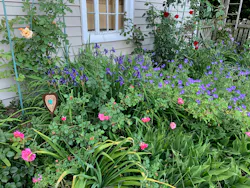
I have been a passionate gardener for most of my life, but having done a little learning about plastic in the seven years I’ve worked at PMM, there are now a few weeds of unease among the roses when I consider the amount of plastic waste my hobby generates.
I spend a happy week every May buying vegetable plants, herbs, perennials and annuals, wandering through acres of greenhouses and inhaling the smell of damp dirt and greenery after a long, cold Northeast Ohio winter.

But by the end of that week, as the new plants are settling into their baskets and beds, I’ve accumulated a tower of empty plastic nursery pots, cell packs, trays and tags.
They can’t be recycled in my curbside cart. (Before I started working at PMM, I assumed, like many people do, that plastic was plastic and therefore recyclable. I have since become one of Those People who has to stop myself from “educating” anyone I see throwing a foam cup into a recycling bin.)
Although some local nurseries take back their own branded pots, I usually patronize at least half a dozen greenhouses, many of which are miles away, and I’d burn more petroleum driving a second circuit to return them.
But I cringe at the thought of sending them to the landfill. It’s a frustrating conundrum, trying to be Earth-friendly by growing my own food and flowers while contributing in equal measure to the plastic waste problem.
There are some small ways I’ve managed to incorporate circularity into my gardening routine. I grow some seedlings in peat cells that go right into the ground along with the plant. I reuse pots as often as I can, and you will never see black landscape plastic in my beds.
I own several pairs of stretchy sleeves from Farmers Defense that ward off bugs, scratches and the sun. They’re SPF 50, cover me from my knuckles to my upper arms and are cool and breathable. Not only are they made with Repreve fabric from recycled PET bottles, they are shipped in a compostable plastic envelope, and Farmers Defense plants a tree for every pair ordered.
I have more than 50 rosebushes, so tough gloves are a must. This year I bought a pair of Watson gauntlets, cleverly named “Game of Thorns,” which incorporate WasteNot yarn made from 100 percent recycled PET.
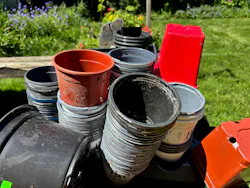
Still, that pile of plastic pots weighs on my conscience.
Healthy Pots, Healthy Planet, an organization advocating for a transition away from petroleum-based pots, acknowledges that there are few good alternatives right now. The initiative was launched by the Association of Professional Landscape Designers.
Growers and greenhouses are businesses, and plastic pots are lightweight, durable and cheap — all the factors that make plastic the primary choice for so many uses. Natural materials like paper and peat degrade quickly. Bioplastics just aren’t there yet in terms of availability and price.
“Old-school options such as bareroot and balled & burlapped are utilized less and less as some growers turn to automation for plant production. Land costs, climate, and labor shortages make container growing methods more workable, and, without consideration for disposal, more affordable,” the group says in its 2023 “State of the Pot” report.
In 2019, according to the report, nearly 242 million herbaceous perennials were sold in pots in the United States. And that figure doesn’t include annuals, which are sold mostly in plastic flats or small pots.
Healthy Pots, Healthy Planet suggests returning pots to garden centers or reusing them whenever possible, choosing plants in pots made of recycled plastic, and seeking out opportunities for recycling if municipal bins don’t accept them.
I managed to find one of those last year. A local Wild Birds Unlimited store held a pot takeback event in partnership with Alterra, an Akron-based advanced recycling facility that can process difficult materials. I felt a little better, but thanks to my job, I know better than most people how insignificant its true impact was.
It’s the same story: Real progress on sustainability is going to take commitment.
To funding and building the necessary infrastructure so we can collect and process more waste plastic.
To developing workable biobased materials that run on existing machinery and can be recycled, composted or even planted right in the ground.
To making sustainable plastics economically competitive with virgin petroleum-based resins.
And to educating the public and making recycling easy.
What will it take to finally plant those seeds and grow a better, less wasteful future?

About the Author
Lynne Sherwin
Managing Editor
Managing editor Lynne Sherwin handles day-to-day operations and coordinates production of Plastics Machinery & Manufacturing’s print magazine, website and social media presence, as well as Plastics Recycling and The Journal of Blow Molding. She also writes features, including the annual machinery buying survey. She has more than 30 years of experience in daily and magazine journalism.