Social media helps Paking Duck take wing
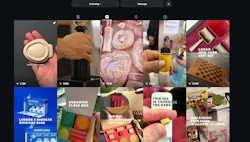
Problem: A small new packaging manufacturer was seeking to differentiate from its competition.
Solution: Social media has given Paking Duck a way to directly communicate its advantages to potential customers.
Remember the unboxing video craze?
People watching, mouth agape, as someone else tore open his or her latest Amazon package?
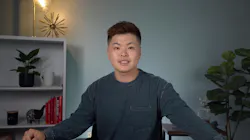
Jason Wong, the 28-year-old CEO and founder of custom packaging maker Paking Duck, was a kid when that trend started. But now that he’s older, he’s interested in what’s on the outside — the ins and outs of the package itself. And he’s growing his business by leaps and bounds with social media — the same way those unboxing influencers elbowed their way to YouTube fame. He says other manufacturers should give it a try.
Headquartered in the U.S., Paking Duck manages manufacturing plants in China. But its most important presence is on potential customers’ screens.
“The key thing to our growth is our commitment to making really good content,” Wong told Plastics Machinery & Manufacturing (PMM) in April. “I think for most manufacturers, they don't really think about content as a way to drive demand, but we did. So, the first thing that we did was building a content team, and last year, we got about [17] million views across our social media manufacturers, which is really tough to do in a B2B space. And, so, we've been able to have a pretty steady stream of leads.”
If you think social media and manufacturing don’t mix, think again.
It’s time to give a quack.
Content creation drives growth
Paking Duck, which started less than three years ago as a paper packaging maker, has doubled in a year — a growth rate Wong said he expects to sustain for the next couple years. It employs about 95 people, including 55 people across three factories in China and about 40 in offices in New York. The administrative team includes five to 10 content creators.
For Paking Duck, each new order the company lands represents as much as $500,000.
A serial entrepreneur, Wong started his first business at the age of 14, running blogs. Since then, he’s started up businesses selling, first, clothing, then coloring books — ”got a quarter million dollars the first week of launching coloring books” — then cosmetics, where he honed both his social media skills and his fascination with packaging.
In videos on Paking Duck’s YouTube channel, Wong reviews the packaging of iconic brands, such as Prada, Dior and Rolex, and explains how manufacturers produce premium effects, such as embossing, matte finishes and gold-foil stamping.
He explains the manufacturing process and tries to bring transparency to pricing.
In a typical video he delivers matter-of-fact critiques such as, “This is probably around 4 cents.” “The logo is slanted. It is not even put on properly straight.” “This paper is 200 grams.” “There's definitely room for improvement. ... Definitely not the attention to detail that I would expect. ..."
“I'll break down, how much does it cost to make the shopping bag at a designer store, how much does the Apple box cost when you get your iPhone? Or what is the manufacturing process of making the beautiful packaging you get from XYZ?” explained Wong, who makes his own posts almost daily.
“These videos are both educational and entertaining, so I can reach a broader audience, but at the same time, I'm able to establish myself as an authority figure by talking about the technicalities of manufacturing, which I think targets the people who are really looking for packaging help, and they’re looking for someone who’s a specialist.”
Helping brand owners understand the market
In a lot of cases, he said, brand owners are unwittingly paying too much, simply because they don’t understand the packaging market. While in the cosmetics industry, Wong said he saw firsthand the potential costs of failing to shop around.
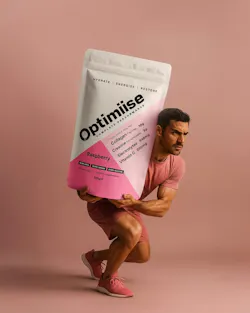
“Let's just say you want to make a supplement brand. You want to make protein powders, and you want to make a bag of it. You're probably spending most of your time formulating the best protein powder, creating all the nutrients, all the vitamins that you want to put in it. But the person who's making all the powders for you typically [has] a relationship with a packaging person, so you're just like, ‘Hey, you're making my powder already, and you're going to put the powder in the bag. Why don't you just tell me how to make the bag?’ ” Wong said. “And, so, in a lot of instances, we've found that customers don't know who's actually making the packages.”
Paking Duck’s YouTube channel has thousands of subscribers, and videos draw hundreds of views; the company’s Instagram account has more than 17,000 followers. The company also posts on TikTok, and Wong is active on LinkedIn, where he monitors statistics, such as page views. Headlines on Wong’s LinkedIn page identify him as “The 20-year-old making unholy amounts of cash on meme bibles” and proclaim, “Guy goes viral taking pictures with plastic ice cream cones.”
With titles like, “How Boring Packaging Can Make Billions” and “The Secret Behind Cosmetic Brands And Their Bottles,” Wong’s videos aren’t drawing international influencer numbers, but viewers have proved the right kind of leads — customers who’ve reached out after clocking his online presence include Fiji Water and Quest Nutrition, which makes protein bars. Consumers can find products packaged by Paking Duck at stores like Wal-Mart, Target and Costco.
In all, according to its website, Paking Duck has made packaging for more than 2,500 brands.
“At Paking Duck, we work with plastic every day,” Wong says in one video about plastic packaging, “And let me tell you, there's an entire world behind that shampoo bottle or snack pouch you casually toss in your cart, from precise molds that shape bottles into ergonomic signature silhouettes to shrink sleeves that wrap products in vibrant, full-color designs. Plastic packaging is anything but basic.”
Riding out rough economic waters
At a time when other companies might be struggling, Paking Duck is taking off. Its outreach is one reason; a diversified portfolio is another contributor to its success, Wong said.
Just as they have for other manufacturers, tariffs have presented challenges for Paking Duck, he said. But, with a network that allows it to split manufacturing about equally between paper and plastic, Paking Duck is better able to weather supply chain disruptions.
Because of the war in Iran, Wong said, resin prices and availability are especially volatile.
“I think there's just a difference in prices that we have to give to our clients. ... We can't guarantee that the volume [we could] get previously is now able to be provided by us. ... We had a lot of people who wanted to order, but because of the increase in prices, they're ordering less, which gives us a little bit more supply to give to people who still want to order the same amount,” Wong said.
When it comes to price hikes, he said bigger customers have demonstrated more resilience than smaller customers.
“Our smaller clients are definitely feeling it a little bit more, so they're little more conservative. So instead of ordering 10,000 units, they might order 8,000 units. So, we're seeing slight pullbacks for the smaller guys, but the big guys are still going full steam ahead.”
But Paking Duck is working with customers to lessen the costs it passes onto them, while still remaining competitive with bigger players in the packaging manufacturing space.
As he demonstrates in his video, Wong knows how much those premium touches on packages cost, so he recognizes where there’s room for a smaller supplier to help out a customer, while still turning a profit.
It’s an insight he’s hoping to share with his viewers, as he claimed of his competitors, “they'll charge you an extra 20, 30 percent of the markup, being the middleman.”
“By creating this brand around the manufacturer for packaging, I'm able to show people that you can have a direct relationship with your packaging supplier and have the freedom and customization that you otherwise wouldn't have if you were to just go through the middleman,” Wong said.
Through social media, Paking Duck is making sure potential customers realize they have options.
For Wong, it’s a strategy for success, even in tough times.
“I think we're in a position to swing for the fences,” he said.
About the Author
Karen Hanna
Senior Staff Reporter
Senior Staff Reporter Karen Hanna covers injection molding, molds and tooling, processors, workforce and other topics, and writes features including In Other Words and Problem Solved for Plastics Machinery & Manufacturing, Plastics Recycling and The Journal of Blow Molding. She has more than 15 years of experience in daily and magazine journalism.