Farrey sees bright future with SPE-PLASTICS merger
Key Highlights
- Pat Farrey's diverse background includes publishing, psychology and plastics, leading to his current leadership role and industry influence.
- The merger between SPE and PLASTICS aims to unify efforts in advocacy, workforce development and technological innovation, amplifying industry impact.
- Farrey emphasizes the importance of embracing technological change, especially AI, and fostering collaboration to stay ahead in a rapidly evolving industry.
- Leadership today requires fearlessness, continuous learning, and surrounding oneself with smart, innovative people to navigate fast-paced technological advancements.
- The industry is working to improve its image through positive messaging and sustainable practices, with a focus on recycling and science-backed policies.
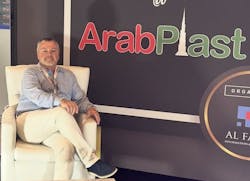
Call it a stroke of luck.
As a kid, Pat Farrey wanted nothing more than to play baseball. But when that didn’t pan out, he earned a degree in psychology and eventually began working as a publisher of a couple of magazines covering packaging. That led him to plastics, and, in 2017, to his role as the head of Society of Plastics Engineers (SPE), which in the past few months has been preparing for its Jan. 1 merger with the Plastics Industry Association (PLASTICS).
With the motto “Better Together,” the combined organization will have a bigger impact, Farrey said. In a mid-December conversation with Karen Hanna, senior staff reporter for Plastics Machinery & Manufacturing, he looked forward to tapping into that potential, and expressed gratitude for his good fortune in finding a home in the plastics industry.
How did you end up in plastics?
Farrey: I was one of the owners of a business-to-business publishing company. We had five titles all related to packaging. We sold the publishing company to a larger publisher, and one of the associations we were publishing a magazine for was looking for new management, so the Institute of Packaging Professionals invited us to manage their business. That’s how I got into the association business. We managed a half-dozen packaging associations. We sold that company, and then SPE was looking for a new CEO, and I was lucky to be invited to that.
What led to the decision to merge with PLASTICS?
Farrey: SPE and PLASTICS have always had a collaborative relationship. We’ve supported each other’s programs in a variety of ways, and it was really just through conversations about those collaborations that we stumbled on the idea these two organizations might be better if they were together. We found our boards had a lot in common in their short- and long-term strategic plans, specifically around workforce development, positive plastics messaging and technical education.
But why now?
Farrey: It’s actually a conversation that has happened a couple of times over the years. It just kind of never came together. I think the timing now is right, because there are not a lot of businesses that are doing their business the same way they did 80 years ago. It was really one of those things where the sun, the moon and the stars all lined up.
Have you heard from anyone concerned about the transition?
Farrey: I think everybody’s concerned when change happens. Change can be difficult, especially for such long-established organizations, but the more people hear about the vision and what this new organization can accomplish, the more excited they get. There’s not been really any negative feedback; there’s been questions — which are fair — and helping people understand what it looks like and what it means to them. When they do, it’s kind of universal excitement.
How is the transition going?

Farrey: We expect the final documents to be signed any day. And then, the real transition, the real integration, starts Jan. 1. That’s when the fun stuff begins. I love my lawyer and accountant friends, but I’m really looking forward to the time where I can put that behind us, and get on to the work of serving our members and the industry.
How will the merged organization approach its work?
Farrey: That’s the fun stuff. I think that’s the place where the industry will see the greatest impact. The Plastics Industry Association does a great job on “Big ‘A’ ” advocacy. That involves government relations and legislative monitoring and influencing legislative decisions. SPE’s advocacy, we talk about in terms of “Little ‘A’ ” advocacy. That’s the grassroots messaging of the good things that plastics does in the world, in the economy. We have programs that take positive plastic messaging into schools, for example. We have hands-on programs that talk about what plastics is and does. Getting those messages out is really eye-opening. Combining those two efforts on the advocacy front — the grassroots positive messaging and legislative advocacy — is going to be a real powerful voice for the industry.
The second piece is related to that, around workforce development. We all know the industry is facing some shortfalls. But people are more likely to join industries they feel good about. Combining positive messaging with developing the future workforce through those programs and other programs is going to be a real priority.
The third piece is the sharing of technical education, the developing of new technologies, by combining the technical membership that makes up the SPE side with the corporate resources that make up the PLASTICS side. I think we’re going to see not only more investment and more support of technology and technology development, but also sharing those technologies across stakeholder groups. There’s a lot of great stuff happening, and I think the coming together of these two organizations will really support that.
The combined organization will still serve individual members through SPE programming and corporate members through PLASTICS programming, but we’ll find ways to share the resources, share the internal structure and those kinds of things, to do all those programs better.
SPE will become a division of the Plastics Industry Association. In that division, we’ll continue to do the kind of things that SPE has always done. People can join the organization, whereas companies join PLASTICS. We’ll continue to produce great technical programs.
I’m lucky enough to be the guy who figures out how to get all these smart people working in the same direction. It’s quite an honor. ... I’ll report to [PLASTICS CEO Matt Seaholm], and gladly so.
There will be zero staff reductions on either side. We will be able to eliminate some redundant external support. There’ll be some economies of scale related to that.
When we align our voices, I think we’re able to have a better impact. I think if there are too many groups that are kind of working in parallel, we’re serving the same people, we’re serving the same companies, we’re serving the same industry, we have the same goals. But if one’s working over here and one’s working over here, you don’t have the same impact as if you put that all together. That’s the vision of the two boards [and] staff teams: How can we leverage our resources together and best serve the industry and the companies and people in the industry?
Can plastics turn around its image?
Farrey: I don’t think anybody in the industry wants to see plastics having any kind of negative environmental impact. There’s a lot of work being done to strengthen recycling and the recycling streams and the resources that go into that. I think those efforts will continue on the PLASTICS side, but marrying the technical folks in the industry with the people who are making policy recommendations, I think, is going to be real powerful. I think industries run into problems when they’re making statements that can’t be backed up by science or facts. I don’t think it’s at all disparate to bring technical people and policy people into the same room so the industry is taking positions that are defensible, sustainable and accurate.
Can plastics really be more sustainable?
Farrey: There are a lot of smart people working on a lot of different avenues to do that. I think everybody agrees it can be and should be. I get to work with a lot of really smart people who are working on these problems every day. I would not bet against them.
What would you say to people within the industry who aren’t involved in these industry groups?
Farrey: As these two organizations come together, this is going to be the biggest organization serving the plastics industry anywhere in the world. if you’re working in the industry and you’re not taking advantage of the programs and opportunities within the organization, I think you’re really missing out. There are just so many opportunities to meet people who do the same thing you do, share ideas, get answers to questions, and maybe find your next job or figure out how to advance your career. We have training on technology. We have training on soft skills. There are so many things [to] take advantage of, individually or for your company.
What leadership advice would you give to other people in the industry?
Farrey: Leadership positions today, I think, are very different when I started my career. I think leaders today have to really approach their job fearlessly. You have to be willing to learn stuff, to recognize you don’t know everything, to surround yourself with really smart people. The leader’s job is to hear and distill and ultimately make the decision.
Technology is advancing so quickly. Communication advances so quickly, and how we all do our work, and the timeline we have to do our work and the personal and social pressures we have, just all these things that bombard us, you really have to quiet the noise and keep your eye on the goal. I don’t envy anyone who’s starting their career now; I think it’s much more challenging than it’s ever been.
But I meet some really great, smart young folks who I can’t hold a candle to the things they know, and I’m excited for the future of the industry. There’s some cool stuff going on. I’m excited to play a small role in supporting those people and companies toward their success through the work SPE and PLASTICS do.
What excites you about the industry?
Farrey: Some of the stuff that’s happening in the AI space, as it relates to research, as it relates to product development and testing. We’ve done some really amazing workshops on how to use AI tools in plastics manufacturing and plastics research. I’m blown away by some of that stuff that’s happening. I was around when robotics started to become a thing, and we thought, “Oh my gosh, we’re living in the future now,” and that technology doesn’t hold a candle to what these companies are going to be able to do now.
But, with that comes the challenge of having a well-trained, skilled workforce that can employ those technologies. It’s a bit of a double-edged sword. The pace of technology development, that’s the part of the business that amazes me.
Is coping with all that technological change one of the challenges facing today’s leaders?
Farrey: I think it’s just keeping up. I remember, when the internet started to become a thing, I was in publishing, and publishers were deathly afraid of the internet.
It’s kind of like that now, only 100 times faster. The internet didn’t happen overnight; we had some time to think about it and plan for it. This stuff is literally happening overnight. I think being able to stay attuned to not only the technologies but how to use those technologies, I think that’s one of the bigger challenges leaders today have.
Any advice for coping with technological changes?
Farrey: You read everything you can get your hands on, and you talk to people who are figuring out how to use this technology.
There’s some places that you can put a toe in the water and learn how to use, particularly AI technology, without being an AI expert. SPE has an expansive technical library. We create and curate all this great technical information. We built this terrific technology library, and if somebody had something they needed, they would put in a couple of keywords, and we give them a list of 600 articles they could read.
We just built an AI tool we’ve trained on all this technical information. We’re continuing to feed new information into it. It’s trained specifically on peer-reviewed content, and now you can ask questions in real time, in real words, and get real answers. It’s speeding up the way people are doing research enormously. So, if you’re on the technical side of the business, or you’re doing research, or you have a problem you want to solve, this might be a really cool tool, not just to solve your problem, but also to see how technology can enable that.
There’s some other AI tools in the industry that do similar things with different content. I would take a look at those and see how those can impact your daily life, your daily business.
What would you have done had you never found your way to the plastics industry?
Farrey: From the time I was little, I always wanted to be a professional baseball player, but that was never in the cards. I figured that out early on when I couldn’t hit a curveball.
I really love what I do. I’ve been lucky to have a lot of really diverse experiences. I’ve gotten to travel all over the world, to meet people in companies or attend events. It’s a career I kind of came into accidentally, but I wouldn’t go back and change the past, and I’m really, really happy with where I ended up. I’m a lucky guy.
What do you like to do outside work?

Farrey: I have a great wife who puts up with me. We love to travel. I have one grandson and a granddaughter on the way, which is spectacular fun. It’s way cooler to be a grandfather than a father. I’m a horrible golfer, but I like it. I tinker with 1976 MG Midget, which I can’t figure out how to get running currently. So I’m not a very good mechanic, but I enjoy it.
What would you like to be your legacy?
Farrey: My dad passed away about 10 years ago. He was a banker. At his funeral, there was a line around the block. People were waiting hours and hours to pay their respects. I got to meet all the people he knew — heads of big businesses, people he did business with, all the way down to the waitress from the local restaurant and the guy at the newspaper stand. Not one of those people came up to me and said, “Your dad was a really great banker.” They all came up and said, “Your dad was really great guy, and we’re gonna miss him.”
If you think about legacy, it’s not what you’ve accomplished at work, it’s what you’ve accomplished with the people you’ve known through your life. I think a really great legacy would be [having] a couple of people say, “Farrey wasn’t a bad guy.” I think that’s the legacy I would aspire to.
WHO IS HE: Pat Farrey, executive VP and chief integration officer for Plastics Industry Association (PLASTICS), following its merger with the Society of Plastics Engineers (SPE)
SIZE OF SPE STAFF: 13 staff members and about 35 contractors
AGE: 63
EDUCATION: Bachelor of Arts, psychology, Wheaton College, Wheaton, Ill.
About the Author
Karen Hanna
Senior Staff Reporter
Senior Staff Reporter Karen Hanna covers injection molding, molds and tooling, processors, workforce and other topics, and writes features including In Other Words and Problem Solved for Plastics Machinery & Manufacturing, Plastics Recycling and The Journal of Blow Molding. She has more than 15 years of experience in daily and magazine journalism.