Workers aren't coming back, so it's time to automate aggressively: Talking Points
Complaining about the shortage of skilled labor is not solving the problem. The Band-Aid fixes we are focusing on are not much of a solution, either.
A bold shift in thinking is needed.
The current skilled labor shortage in manufacturing began in the 2010s as baby boomers started leaving the workforce, primarily through retirement. It reached crisis stage with the COVID-19 pandemic in 2020. That was especially true in parts of the plastics processing industry that quickly expanded during the pandemic.

Manufacturing employment has actually declined for 40 years, according to the U.S. Bureau of Labor Statistics. The primary reason has been the shift to a service-oriented economy.
Globalization has also played a big part. It has given OEMs in the U.S. access to cheaper parts made anywhere in the world. “Buy American” is a weak argument compared with the cheaper cost of goods.
Manufacturing and the plastics industry face systemic barriers. There is not much reason to think that today’s labor shortage is going to improve.
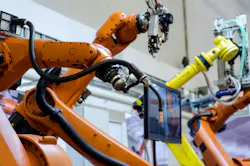
We need to think about automation on a grand scale as a bold shift to solving the problem. I am not referring to automating a task or work cell; we need to envision entire plants that are fully automated, then make it happen.
For years, we attributed China’s manufacturing growth to plentiful and cheap labor plus government incentives. But Chinese manufacturing companies are investing heavily in automation and the gap between their efficiency and most of the rest of the world is widening.
China is the world's largest and fastest-growing market for industrial automation. Artificial intelligence (AI) is deeply integrated in China’s automation systems. The country holds more than two-thirds of the world’s robotics patents.
Robot density is 166 units per 10,000 workers in China. The number is currently higher in the U.S., but the International Federation of Robotics estimates that Chinese manufacturers are currently installing 10 times more robots per year than the U.S.
Many of China’s new electric vehicle, electronics and battery plants run 24/7 with lights out.
Machinery and equipment suppliers to the plastics industry are up to the task of supplying plant-wide automation. I once saw a complex materials handling system built by Moretto perfectly delivering different materials in a large medical molding facility. I have watched engineers at Arburg, Engel and Wittmann assembling sophisticated work cells to solve a customer’s particular problem.
But adding a cobot to take parts out of a molding machine, or installing a single robotic welding station, or using sensors to check part quality on a single machine, won’t solve the skilled labor shortage. Those are Band-Aids, at best.
A bold shift in thinking and taking steps to build large automation systems will keep U.S. manufacturing and your business competitive.
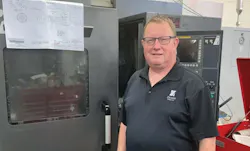
Thank you, Stan Glover
Everyone who turns on a plastics processing machine today should stop for a few seconds and say a quick prayer for Stan Glover, who passed away Oct. 2 at age 65 from lymphoma. Godspeed, Stan.
He was the longtime director of technical sales for Zeiger Industries but I knew Stan more through his work on developing processing machinery safety standards. The Plastics Industry Association said he “volunteered his time and expertise to improve machinery safety standards .... Stan helped shape PLASTICS and the industry we serve in ways that will be felt for years to come.”
Stan saw his machinery safety standardization work as a worldwide calling. He was often knee-deep in the bureaucracy of foreign associations and governments that set their own safety standards for plastics and rubber processing machinery. I often marveled at his skill and patience in getting so many groups — often with goals that were not entirely in sync — to work together.
It is impossible to estimate the number of hours he volunteered for the plastics industry. He traveled extensively over the years and no doubt took a lot of money out of his own pocket in the name of developing safer processing machines.
It is also worth mentioning that he once told me he could not do this work without the full support of Don Zeiger, founder of Zeiger Industries, and the Zeiger family. There are plenty of people making contributions to the industry through important volunteer service on association committees. We generally do not give them or their companies the credit they deserve.
Stan never sought personal attention. He was the consummate behind-the-scenes sort of guy, pushing tirelessly to better the industry he loved.
About the Author
Ron Shinn
Editor
Editor Ron Shinn is a co-founder of Plastics Machinery & Manufacturing and has been covering the plastics industry for more than 35 years. He leads the editorial team, directs coverage and sets the editorial calendar. He also writes features, including the Talking Points column and On the Factory Floor, and covers recycling and sustainability for PMM and Plastics Recycling.