Starlinger recycling line processes very contaminated material
By Ron Shinn
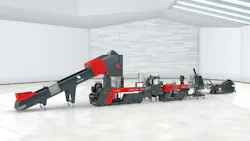
Starlinger has optimized components on the recoSTAR dynamic art recycling system designed for heavily contaminated post-consumer plastic waste with a high moisture content.
The Austrian machinery manufacturer displayed the new machine at K 2025 and said it can produce high-quality granulate that can be used in demanding applications. It is designed to process film, fibers, thermoplastic in-house scrap and washed post-consumer waste from a wide range of materials.
The system can produce pellets with up to 100 percent recycled content.
Starlinger has enlarged the Smartfeeder that simultaneously shrinks and cuts, mixes and homogenizes, rotates and dries the material. The feeder now uses more powerful drive motors that are in a lower energy class, the company said.
Ribs have been added to the feeder where the input material is prepared for extrusion. The geometry of the cone and feed zone of the extruder have been changed to make sure the material is held longer and enters the extruder with more pressure and with a spin. This leads to a significant increase in machine performance, according to Paul Niedl, commercial head of recycling technology.
Radiant extruder heat is used for the Smartfeeder air-flush, which allows for a higher moisture content.
Starlinger’s Dynamic Automation Package detects fluctuations in the input material caused by differences in bulk density, size or moisture content and automatically adjusts the extruder’s speed. It can also recognize interruptions in material feed and put the system into stand-by mode, then restart when material feed is resumed.
Maintenance has been simplified and shortened, according Niedl.
Starlinger builds its own wear-resistant extruders. The extruder barrel is water-cooled and has a separate water pump.
An optional degassing extruder removes volatile contaminants and monomers from the melt. A C-VAC module is available for highly printed or organically contaminated input material, and an H-VAC module is available for hygroscopic input material.
A back-flushing melt filter is also available as an option.
A wide range of pelletizers are available, depending in the polymer type and preferred pellet shape. For automatic strand pelletizing, broken strands are automatically inserted into the strand pelletizer without operator intervention.
Contact:
American Starlinger-Sahm Inc., Fountain Inn, S.C., 864-297-1900, www.starlingersahm.com
About the Author
Ron Shinn
Editor
Editor Ron Shinn is a co-founder of Plastics Machinery & Manufacturing and has been covering the plastics industry for more than 35 years. He leads the editorial team, directs coverage and sets the editorial calendar. He also writes features, including the Talking Points column and On the Factory Floor, and covers recycling and sustainability for PMM and Plastics Recycling.