Meaf Machines technologies bolster recycling efforts
Key Highlights
- MEAF debuted Xtender melt co-processing modules at K 2025, targeting higher-value use of recycled polymers.
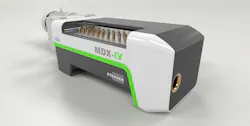
- MDX-IV boosts rPET intrinsic viscosity via liquid-state polycondensation, while vacuum degassing removes contaminants and gases.
- Disc-processor design transports melt axially; heating/cooling plus inline viscometers control temperature and additive dosing.
- MDX-DEO decontaminates and deodorizes recycled materials, enabling recycled content for odor-sensitive automotive and carpet applications.
- Both MDX modules retrofit single- and twin-screw extruders, helping meet EU recycled-content mandates taking effect in August.
By Ron Shinn
Meaf Machines launched two modules of its patented polymer melt co-processing technology called Xtender at K 2025.
The two modules are MDX-IV, which is designed to increase intrinsic viscosity (IV) and decontaminate recycled PET (rPET), and MDX-DEO, which decontaminates and removes odors from other recycled materials and post-consumer thermoplastics.
Meaf Machines BV is headquartered in the Netherlands. The company, established in 1947, is known for manufacturing compact extrusion lines for PET, rPET, PP and PS sheet, extrusion coating and laminations, and lines for specialty products using advanced materials.
Meaf said its co-processing technology has exceptional mixing and degassing capabilities. Both the MDX-IV and MDX-DEO machines are based on this technology. Both can be retrofitted on single-screw and twin-screw extruders.
The MDX-IV unit is specifically designed for rPET in the packaging, recycling and film and sheet production markets. It allows the IV to be increased in the liquid state through polycondensation, also known as LSP.
The MDX-IV is located downstream of the extruder. The melt is transported axially through a disc processor equipped with multiple wedge-shaped discs. Contaminants and unwanted gases are extracted by a vacuum.
Heating elements and a core cooling element regulate the temperature of the melt. Along with an adjustable feed, two inline viscometers detect and control additives used to accelerate condensation.
The MDX-DEO unit is expected to be especially useful to manufacturers of carpet backing and interior automotive components. Previously, odor and volatiles component requirements have limited the use of recycled materials in those applications.
“With our revolutionary new MDX series, plastics processors gain more opportunities to reduce dependence on virgin feedstock,” said Ronald de Bruijne, Meaf sales manager, in a press release.
Meaf said the MDX products will help processors deal with new European Union packaging regulations that will require 30 percent recycled material in PET packaging and 10 percent in other products. The regulations go into effect in August.
Contact:
Meaf Machines BV, Yerseke, The Netherlands, 31-113-571495, www.meaf.com