Intravis systems help boost efficiency, reduce scrap
Key Highlights
- Intravis vision systems monitor individual mold cavities and detect emerging production problems, helping plastics processors reduce scrap and prevent costly downtime.
- Cloud-based IntraVisualizer software tracks rejection rates, analyzes historical production data and alerts operators to developing quality issues.
- Intravis’ IntraRecommender uses AI to analyze inspection and process data, recommending corrective actions that help operators stabilize production faster.
- Intravis offers application-specific inspection systems for closures, bottles, preforms, labels and multilayer structures, with cloud software analyzing plant-floor data.
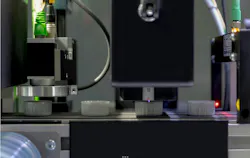
Vision inspection systems have evolved from simply inspecting finished parts and removing defective products before they reach customers to helping plastics processors quickly recognize developing problems.
As technology has evolved and processing speeds have increased, simply identifying bad parts isn’t good enough for many manufacturers.
On high-speed closure lines, a problem affecting even a few cavities can result in significant lost production before anyone notices, said Andreas Müller, CEO of Intravis Inc., the U.S. subsidiary of Germany-based Intravis GmbH. Intravis systems can monitor individual cavities and generate large quantities of production data that can reveal problems almost immediately.
Vision systems increasingly are used not just as a “quality gate,” but as an early warning system, Müller said.
Intravis vision inspection systems, in addition to inspecting finished parts, can monitor nearly any part of a manufacturing process, including injection molding, blow molding and extrusion. Information can be communicated to a machine operator, production manager, or other company employee through dashboards viewed on an HMI, computer, tablet or phone, for example.
Collecting data from a production line is no longer a problem for modern vision systems.
“Today, the problem is more about ‘what are we doing with all that data?’ ” Müller said. “Imagine you are an operator, and I provide you with 144,000 data points. It would be overload. You could not do anything with it. It would be way too much, right? So, the challenge is: how can we visualize it?”
The goal is to give the operator and those in charge of production the information they need to produce as many good parts as possible.
Helping manage all that data
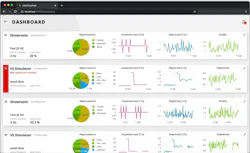
To make that task easier, Intravis offers cloud-based software called IntraVisualizer that offers real-time monitoring and historical analytics. The software allows users to oversee their production status 24/7, monitor rejection rates in real time, and analyze production for different days and shifts. It can help boost overall production effectiveness, according to the company.
“All the data from the inspection system, regardless of whether it is an inspection system for closures, preforms, bottles or decoration, goes into the cloud,” Müller said. “There, we are using cloud-based software, IntraVisualizer, our proprietary software, processing the data, and it can point a finger to the problem.”
For example, the IntraVisualizer could tell an operator that no closures are coming out of mold cavity No. 5. Push notifications could be sent to a customer’s cellphone or email. The system could also report when the problem or event was first documented and when it was resolved.
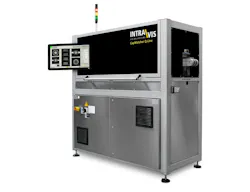
Citing an example of how Intravis vision systems can “solve problems before they occur,” he referred to applications involving blow molding of bottles. Intravis vision systems can measure dimensional data including diameter, ovality, gate lengths and “many, many geometric aspects.” If any of the dimensions begin shifting outside of preset tolerances, a notification can be relayed to the operator or appropriate individuals. In some cases, the system might generate a prediction that within a certain length of time, the user’s parts could begin operating outside of specifications.
“It’s really measuring those dimensions and informing the customer with qualified, precise information that they need to avoid scrap,” Müller said.
Assistance for less experienced operators
Plastics processors are dealing with a lack of skilled workers who know how to correct a problem. Intravis recently released cloud software incorporating artificial intelligence called IntraRecommender that can help bridge the gap.
IntraRecommender collects and analyzes data from Intravis vision systems, process data and machine operators. It then recommends actions machine operators can take to optimize the production process. Thanks to feedback from the machine and its operators, IntraRecommender learns and automatically adjusts its recommendations.
“With these recommendations, you can get to a stable process in a much faster time than when an operator is trying to do it by trial and error,” Müller said.
Eventually, Intravis hopes its systems can autonomously adjust processing equipment to correct for problems.
“In the end, this is the ultimate goal,” Müller said.
A strong partnership between the makers of vision inspection systems and processing equipment is needed, he said, and processing equipment manufacturers and users need to build confidence in the technology.
Intravis has a range of application-specific inspection systems, all of which carry “Watcher” names. The inspection systems include:
- CapWatcher: closure inspection
- SpotWatcher: bottle inspection, particularly contamination
- BottleWatcher: bottle applications
- PreWatcher: preform inspection
- LabelWatcher and SleeveWatcher: decoration/label applications
- BarrierWatcher: barrier applications
- LayerWatcher: multilayer preform applications
The inspection hardware remains on the plant floor, while IntraVisualizer and IntraRecommender provide a cloud-based way to visualize and analyze the resulting data.
Intravis Inc., Norcross, Ga., 770-662-5458, www.intravis.com
About the Author
Bruce Geiselman
Lead Reporter
Senior Reporter Bruce Geiselman covers plastics processing technologies and end markets including automotive and packaging. He also writes features, including In Other Words and Problem Solved, for Plastics Machinery & Manufacturing and The Journal of Blow Molding. He has decades of experience in daily and magazine journalism, including eight years at PMM, and is the recipient of a Jesse H. Neal Award, among other recognitions.