Have smart factory technologies reached the tipping point for plastics processors?
Key Highlights
- AI is moving smart manufacturing beyond data collection toward process optimization, production planning and supply chain decision-making for plastics processors.
- Standardized protocols such as OPC UA and MQTT are expanding machine connectivity across processing equipment, auxiliary systems and business operations.
- Labor shortages, pandemic disruptions and private-equity investment are accelerating smart factory adoption as processors seek greater efficiency and automation.
- Lower-cost sensors and PLCs allow smaller plastics processors to collect machine data and begin adopting AI-enabled smart factory technologies.
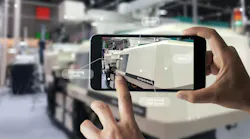
Smart factory technologies are increasingly moving from the discussion and pilot stages into mainstream use, according to experts at Deloitte and DELMIAWorks, a brand of Dassault Systèmes.
Harpreet Kaur, a principal in Deloitte’s supply chain and operations practice, highlighted two factors driving the adoption.
The first is the advancement of artificial intelligence (AI) technology, which is a driver for “smart factory to come to life,” she said. The second is the increasing maturity and reduced costs in the market. AI-enabled smart factory technologies are being adopted “across the ecosystem,” she said.
“We used to have platforms that were not talking to each other,” Kaur said. “The data was not accessible. The data was not moving across the systems.”
However, refinements and increased availability of AI have allowed manufacturers to integrate systems and reach the next level of process efficiency.
Smart manufacturing is advancing beyond connecting machines and collecting data toward using AI to interpret data across the entire manufacturing operation and supply chain. For plastics processors, Kaur sees potential applications ranging from process optimization and equipment maintenance to production planning, raw-material purchasing, inventory management and customer fulfillment.
Information from the production equipment can be communicated to manufacturing execution system (MES) and enterprise resource planning (ERP) software, improving communication between the production floor and the front office, including accounting, HR, purchasing and sales.
AI now allows manufacturers to answer questions such as how much to produce, how much raw material to buy, how much inventory to maintain, why a particular batch came out wrong, and how market demand should affect production, according to Kaur.
Connectivity expands smart factory capabilities
Standardized communication protocols has played a major role in encouraging smart factory adoption, according to the experts.
“The big change has been the connectivity,” said Buddy Bump, DELMIAWorks product manager. “The machine connectivity has absolutely skyrocketed.”
Until about five years ago, machine connectivity was not standardized, and information was often shared through proprietary communication protocols. Equipment increasingly can send data to other systems through standard communication protocols such as OPC UA (Open Platform Communications Unified Architecture) and MQTT (Message Queuing Telemetry Transport).
That shift has changed the scope of the conversation, Bump said. Initially, smart factory technology focused on tracking production counts and other simple tasks.
“These days, the conversation includes a lot more complex problems,” Bump said. “Processors are dreaming bigger.”
Connectivity extends well beyond the primary processing machine, said Steve Bieszczat, DELMIAWorks chief marketing officer.
“Today’s equipment in injection molding, blow molding, extrusion, all of it, involves not only the primary means of production, let’s call it the injection molding press, but a lot of the auxiliary equipment that goes with it — the dryers and the feeders and a lot of the instrumentation for the quality assurance,” he said. “That is all made to be smart now. It’s made to be interconnected today.”
Standardized connectivity also makes it easier for end users to program and connect devices, and it provides a level of security that may have been missing from previous operational technology, Bieszczat said.
The concept of smart factory technology now encompasses the entire manufacturing operation, from planning and material requirements through production, quality, warehousing and shipping.
“It reaches to what we call the front office all the way through the shop floor and down to the loading dock,” Bieszczat said.
Labor shortages and investment accelerate adoption
A shortage of trained workers has also convinced plastics processors to adopt smart technology to become more efficient. The COVID-19 pandemic forced manufacturers to operate with fewer workers while meeting demands for faster turnaround times, Bieszczat said.
“We’ve seen a real acceleration in the adoption of what you might call smart manufacturing or turnkey manufacturing since COVID threw a monkey wrench into the whole process,” Bieszczat said.
Consolidation and private-equity investment also have encouraged adoption.
Historically, many plastics processing companies were run by owner-operators who were reluctant to invest in smart technology. Today, many of those businesses are run by professional managers and backed by investors who have injected new capital with the goal of improving financial performance.
“You’ve got a financial investor saying, ‘I want you to invest in this business. I want you to automate this business, and I want you to make this business worth more money as an asset, a financial asset,’” Bieszczat said. “That’s also pushing the smart factory stuff forward.”
Company size remains a major factor in determining whether a processor adopts smart factory technology, Kaur said.
“The companies that have deeper pockets or are at least a decent size, they are the ones who are at the forefront of adoption of these technologies," she said.
However, smaller manufacturers also have opportunities, she added. They can begin the journey without investing in all new equipment by installing sensors on existing machinery to gather data on select processes and working with a provider of AI services.
The DELMIAWorks experts agreed.
Bump said manufacturing is in a “golden age” for capturing data, made possible in part by inexpensive programmable logic controllers, or PLCs, that feature modern, standardized communications protocols. The low-cost PLCs can be installed on existing equipment.
When paired with sensors, the PLCs can communicate data needed for smart factory applications. Bump said a processor today can purchase an Arduino Opta PLC, capable of communicating data through MQTT, for about $300. That price would have been difficult to imagine a few years ago.
As AI quality evolves, manufacturers are moving closer to lights-out operations, Kaur said.
“We are getting very, very close to autonomous operations because the system is able to understand, collect the data and understand what is going on,” Kaur said. “It then uses the AI to start making decisions and start taking actions in the system … We are finally working toward an intelligent and autonomous plant of the future.”
Contact
DELMIAWorks, Dassault Systèmes, Waltham, Mass., 800-693-9000, http://www.DELMIAWorks.com
Deloitte, deloitte.com
About the Author
Bruce Geiselman
Lead Reporter
Senior Reporter Bruce Geiselman covers plastics processing technologies and end markets including automotive and packaging. He also writes features, including In Other Words and Problem Solved, for Plastics Machinery & Manufacturing and The Journal of Blow Molding. He has decades of experience in daily and magazine journalism, including eight years at PMM, and is the recipient of a Jesse H. Neal Award, among other recognitions.