Rosti makes way for injection molding clean room
Key Highlights
- Rosti North America built one of its first U.S. Class 8 clean rooms to enter medical molding.
- Finding 5,000 square feet was the biggest hurdle; the team relocated about 15 injection presses.
- In one month, maintenance and engineering executed shutdown-to-startup while keeping Germantown production running.
- The project supports diagnostic and lab-consumable components, following Rosti’s 2024 acquisition of Plastic Components Inc.
- Automation additions include bulk pack/tray handling, inspection, palletizing and gantry robotics, plus airlock and gowning areas.
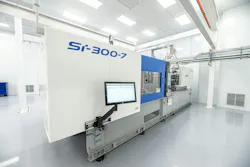
Problem: A company taking on a medical devices project needed to add a clean room to existing space.
Solution: With help from outside firms, including automation experts, it moved 15 injection molding machines around and created space for the project.
By Karen Hanna
A pretty weighty matter awaited manufacturing engineering manager Andy Hoffman when he took his job with Rosti North America two years ago: His new employer wanted him to prepare and install one of the company’s first Class 8 clean rooms in the U.S.
Who knew that the heaviest lift might be just making space?
“One of the biggest challenges was trying to find a space for this clean room. As you can imagine, we just don’t have 5,000 square feet of open space. There’s something always in the way,” Hoffman said.
“We had chosen an area in our plant that was open enough for this clean room, but we did have some injection molding presses that were in the way. So, we ended up having to move about 15 injection molding presses. ... We were able to do that in one month’s time with our maintenance department and engineering department.”
The project — which is still underway, as Rosti’s customer reviews qualifications — began around the same time as Hoffman’s hiring. At the end of 2024, Rosti added Plastic Components Inc. (PCI) to its portfolio. The molding company, with two shops in Germantown, Wis., made thermoplastic components for a variety of applications, with customers in the flow control, consumer products, pool and aquatics, automotive technology and medical industries.
As of now, Hoffman said, the Germantown shops employ fewer than 100 people, running Toyo injection molding machines (IMMs) on more than 70 lines.
“Having equipment that we’re familiar with, that we know, really is a big help,” he said.
At one of the PCI plants, Rosti wanted to start manufacturing diagnostic and lab-consumable components. To do so, it needed Hoffman to direct one of the most daunting projects of his 22-year career in manufacturing.
“One of the reasons why I made the move to Rosti is that they were looking at getting into the medical industry. Previously, I worked for Diversatek Healthcare, and I was a senior engineer there for 11 years with 100 percent medical manufacturing,” he said.
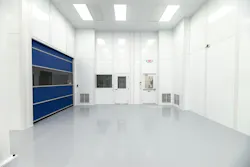
With help from crane and automation specialists, as well as Encompass Total Cleanroom Solutions in Fruitport, Mich., which served as the building partner and project manager, Rosti prepared a 3,500-square-foot space for its clean room. It moved a handful of presses to storage and some to its other recently acquired plant in Germantown.
Star Automation is one of the specialists that is helping with the installation of automation to support a new 300-ton Toyo Si-7 IMM. Hoffman said the system will include a bulk pack and tray operation, “where the robot will actually pull the parts out of the tool and then place them on a tray,” along with automation for inspection and palletizing.
To facilitate efficient downstream operations, Star Automation is supplying a gantry robot, said Kurt Scheife, the company’s central regional sales manager.
“In close collaboration with the automation engineer, several real-time changes were implemented throughout the project’s evolution, including cavity separation, multi-stage packaging and defective part monitoring, all while adhering to a demanding timeline,” Scheife said.
The clean room also includes an overhead crane and dedicated airlock, pass-through and gowning areas.
In addition to moving more than a dozen presses to accommodate all the new equipment, Rosti had to relocate the materials-handling systems associated with them.
Hoffman acknowledged that getting it all set up was quite an undertaking.
That created some headaches, as the Germantown plants continued making parts throughout the whole process.
“We did have to shuffle around our production at first. Our scheduling department wasn’t too happy with us,” he quipped. “But we made it work, [with] a lot more changeovers.”
In addition to the logistics scramble of moving so many machines and so much production, Rosti and Hoffman also have maintained focus on the preparedness of the team taking over medical production for the first time.
To make medical devices, the clean room has to have ISO 13485 certification.
Hoffman also hired a quality manager with a medical molding background.
“That was one thing, that we had to get that certification, as well as having an in-house trainer that handles all of our training with our employees, and then leveraging some of the experience for myself and then other team members that have medical molding experience,” said Hoffman, who spent time working on implementing documentation and protocols.
The goal is a clean room that’s ready to go for current projects, and that’s been designed with future capacity in mind, too.
Hoffman credited the project’s success to the entire team that worked on it, including the maintenance department, saying it was “able to do some miracles.”
“It was a huge feat from shutdown to startup in one month, 15 presses, which is a huge undertaking, and I’m really proud of our team and what everybody accomplished,” he said. “This was definitely a team effort.”
About the Author
Karen Hanna
Senior Staff Reporter
Senior Staff Reporter Karen Hanna covers injection molding, molds and tooling, processors, workforce and other topics, and writes features including In Other Words and Problem Solved for Plastics Machinery & Manufacturing, Plastics Recycling and The Journal of Blow Molding. She has more than 15 years of experience in daily and magazine journalism.