Brett Greenhalgh pursues a higher calling
Key Highlights
- Brett Greenhalgh is stepping away from KraussMaffei Corp. to serve a three-year mission in Munich, supporting young missionaries in a leadership role.
- He built business relationships through by emphasizing personal connection as key to trust and effective leadership.
- He said the people at KraussMaffei were the highlight, praising their passion, expertise and commitment to the company’s success.
- His international background and early experience in Germany shaped both his career path and his appreciation for other cultures.
- He views the transition not as leaving a career behind, but pursuing a meaningful, once-in-a-lifetime opportunity with his wife.
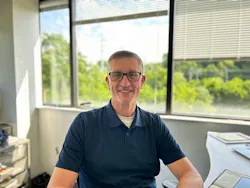
While only at KraussMaffei Corp. a short time, Brett Greenhalgh wanted to know everyone. Having learned from an early age how to establish rapport quickly with others, he regularly took employees out to eat, to hear from them one-on-one about their lives, families and hobbies.
They’re the aspect of the company he’ll miss the most, as he and his wife, Janice, pursue a higher calling. Starting June 23, they’ll begin a three-year assignment overseeing college-age missionaries serving the Alpine German-Speaking Mission, based in Munich, for the Church of Jesus Christ of Latter-Day Saints. An avid bicyclist and reader, Greenhalgh credits his own time as a teenage missionary in Frankfurt, Germany, for many of the positives in his life, teaching him resilience and instilling in him a love of other cultures.
In an interview with Karen Hanna, senior staff reporter for Plastics Machinery & Manufacturing, he discussed the opportunity to follow his faith abroad with his wife, while confident that he leaves KraussMaffei in good hands.
You’ve been at KraussMaffei since 2024. How did you find your way there?
Greenhalgh: I started my career at Boeing, and it was not a good fit for me. It was a manufacturing environment, but it was too big for me.
I had spent some time in Germany as a young man. I really liked that opportunity to be involved with other cultures and peoples, so I decided to leave Boeing and get an MBA in international business. I subsequently worked in Germany a couple times. Then, I came back and worked for a German automotive manufacturing company for 17 years and really liked that environment. In 2008, I decided I was done with automotive. It's a dog-eat-dog place. So I left and worked for a small manufacturer here in Cincinnati. Then, I transitioned [to] a tire distributor. Then, I went to an e-commerce retailer of plumbing supplies and had multiple roles there.
Then, I had the opportunity to come back to an international company, which is KraussMaffei, and I jumped at that. It was almost by accident that [it] was plastics.
What has been the highlight during your time at KraussMaffei?
Greenhalgh: The absolute highlight is the people. We have a wonderful team, both in the U.S. and internationally, and I've really loved working with the people and getting to know them. I would argue our success has nearly nothing to do with me, but is exclusively the input that our team puts forth. The passion they have, the technical prowess and expertise, the desire to succeed and carry on the KraussMaffei brand has been lovely to see and experience. We've got an amazing group of people who love this company and have the skill set to help it continue to thrive.
I think we have a very strong base we're building on. The outlook is great. We have a remarkable brand; we have remarkable technology. We've got amazing people and, with this team in place and these people, [including newly named President] John Fini, leading our U.S. organization, I'm very optimistic for the organization going forward.
You had a routine of taking employees out to lunch, one-on-one. Why were those get-togethers important to you?
Greenhalgh: I just really like people, and I like to know them. I like to understand them. I try to be genuine. ... In a one-on-one, not only can I understand who they are, but they can understand who I am. When we know each other, and we have a basis of respect, or I know their kid plays baseball, or they like puppies or whatever, it's always easier to have the harder conversation, or build rapport. ... It was important for me to get to know everybody. It was a blast. It was really fun to have a chance to meet these folks and get to know them. I just wanted to have the opportunity to genuinely get to know people a little better than you do at the water cooler.
Is it hard walking away from a successful career?
Greenhalgh: I think you always have reservations with a big change because it affects your life. It affects your day-to-day. It affects the people you work with every day. Any time you have a big change like I'm undergoing, you're going to miss folks, and I'm going to miss these people hugely.
... We all derive value from what we achieve and do every day, the sometimes-enormous number of hours we spend doing it, and that helps us define who we are, to some extent. For me, I've never defined myself by my professional career. I do certainly enjoy the opportunity to grow and learn and improve, but I never introduce myself by what I do. That's not who I am. I'm an individual. I give everything I can to what I do, no question, but my job is not who I am, and, so, I'm maybe more comfortable making an adjustment like this, because it's not changing my self-definition.
What will you be doing in Germany?
Greenhalgh: Our church [has] a very structured organization where these young missionaries will serve like I did when I was 19. I refer to that experience as being very foundational for me. I can point to nearly every good thing that's happened to me in my life. Whether it be on a family basis, on a faith basis, on a professional basis, or whatever, I can point to that experience. ... Those young men and women who serve in these missionary callings or roles, there's a structure around that that's defined by geography, and overseeing that structure is a married couple, and their responsibility is to make sure these young missionaries are safe, that they have a place to stay that is organized. My role would be to supervise and coordinate that, make sure they have a place to stay, they're happy, they're doing what they need to be doing, they're safe. ... When they have questions or such, I'm involved to help them work through that.
These are 18-. 19-year-olds [that] have maybe never been away from home. There's certainly going to be [a situation] where they need a surrogate parent, and we can kind of fill that. I'm never going to be their parent — don't get me wrong — but I can fill in that gap while mom and dad are in a different place. There's certainly an opportunity to provide some of that sort of relationship.
What did you learn from your experience as a missionary?
Greenhalgh: At least at the beginning, [it] is very scary and very nerve-wracking. I was going to a new culture. I had to learn a language. That's how I developed a love for that culture and those people. I think it's a wonderful place. I learned an enormous amount about who I am and how I interact with people.
I always had this companion with me, and they rotate every couple of months. ... I had to learn how to work with somebody, how to thrive when you're practically best buddies and how to thrive when you're not, and how to accept rejection from people. ... You learn how to have hard conversations, how to deal with acceptance, how to deal with rejection, how to talk to people. An 18-, 19-year-old, they don’t know how to talk to people, especially today ... how to have confidence talking to people and approaching a stranger or meeting somebody, or developing a relationship with someone, or a friendship, in an environment that's a little abnormal. You have to define, “Who am I? What do I believe in? Does this matter to me?”
I think that really helped me understand who I am and what my relationship to others is, what my relationship to deity is, and helped me at a young age to build some of these feelings and identities that have helped me throughout the 60-plus years of my life. It's an amazing experience. ... It's been very beneficial to me.
There were certainly good days and bad days.
There's bad days where you're kind of going, “What am I doing here?” I think I, like many people, have a sense of a commitment. ... My faith played a big role, and helped me through it. ... That certainly played a very substantial role in helping me through the hard days, because there were many of those. Show me somebody who has a job that every day is great. Life is not easy, and rare is the situation where everything clicks all the time.
I learned in Germany as a young man, “It may not be clicking this week, but if you power through, next week's going to be better.” And those were important lessons to learn, and they're applicable to family, to job, to neighbors, to education, whatever you're doing. It's not my experience that things are great every day, and I learned as a young man there's ways to work through that.
There were amazingly good days, too. You learn how to how to balance the good with the bad, and that's not just a religious thing; that's a social thing. And that helps me, when I'm having a bad day at work, or my neighbor’s making me mad, or whatever, you find a way to work through it.

You ask, “Why would I do this?” I think there's value in helping other people experience those same things. We live in a world that's so full of disunity and discord and arguing, I just think maybe there's an opportunity to do something good and help a few young people have an experience similar to what I had, and set them up for success.
There's a faith and a religious perspective that's very important to me, but there's also a developmental and social element that's very important. ...
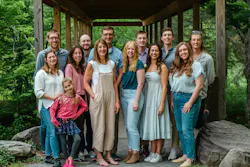
My wife and I are doing something cool together. That's the other part of it that's really attractive to me, is Janice and I get to do it together. This is [a] once-in-a-lifetime kind of opportunity to do something that I really believe in, and I get to do it with Janice.
... The [church] approached me [about the missionary opportunity]. I didn't approach them. I wouldn't be leaving otherwise. We were given the opportunity to accept the assignment, which we did, and then about two or three months later, we found out where we were going to be assigned. We could have gone anywhere. ... Then we found out we're going to Munich, and KraussMaffei is based just outside Munich, and I’m thrilled about that. ... That seems to be a really awesome chance for us to stay connected with our folks from the U.S., as well as the folks from Germany. There's not many places prettier than where we're going. That's obviously attractive and enticing, but I'm not doing this because of Munich. I'm doing this because of the opportunity — and that's the same in Nebraska, as well as in Switzerland — to be able to help these kids, to be involved in my faith in this way.
What do you like to do outside work?
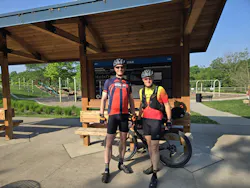
Greenhalgh: I do triathlons. I really love being on a bike. That's my happy place. I like to, obviously, spend time with my wife and six kids. They're spread all over the country, and we like to be with them. I'm a passionate reader. I especially love to read German mystery novels in German. That's one way I keep the language going. I claim to have the best collection in northern Kentucky of German mystery novels; to be truly candid, I think I probably have the only one.
I do a lot with my church and our faith, and love to be outside, love to hike and be in the woods and mountains and that kind of stuff.
What’s next for you, after your three-year stint in Germany?
Greenhalgh: I'm couching this as retiring, because I don't really know what happens when I come back. I don't think I'm going to be a very good retiree. A lot of people are good at projects. I’m all thumbs. I can't do anything at home. I can't build stuff. I can't paint stuff. I can't envision how my house should look. I don't know what I'm going to do when I get back; I'm going to do something. Maybe I get a part-time job. I've tutored at schools before, and I really enjoyed that.
Why was tutoring important to you?
Greenhalgh: My mom and dad taught me to read. ... I can pick up a book and go to somewhere far, far away, and experience a culture, people, a place, and not have to go there. I look at some of these kids who struggle with reading, and I imagine what my life would have been without that ability to experience those things, and it just breaks my heart. I would go once a week to a school and tutor a young man or a young girl and help them progress to a point where they could experience what I have experienced. ... I did it for probably five years.
What would you like to be your legacy?
Greenhalgh: Legacy implies that someone is interpreting what I did or what I didn't do, and I don't really care. I know who I am, and how I treated people. I know how I have integrated integrity into all that I do. So, whatever somebody wants to think is fine, but I'm just happy I know who I am, and I'm comfortable with that.
Just the facts
WHO IS HE: Brett Greenhalgh, president and CFO at KraussMaffei Corp.
AGE: 63 in May
TENURE AT KRAUSSMAFFEI: About 2 years
HEADQUARTERS: Florence, Ky.
EMPLOYEES: 233
About the Author
Karen Hanna
Senior Staff Reporter
Senior Staff Reporter Karen Hanna covers injection molding, molds and tooling, processors, workforce and other topics, and writes features including In Other Words and Problem Solved for Plastics Machinery & Manufacturing, Plastics Recycling and The Journal of Blow Molding. She has more than 15 years of experience in daily and magazine journalism.