Reduce risk in PET bottle development through data, validation
Key Highlights
- Injection molding variability can alter preform thermal behavior, affecting stretch blow molding consistency even when preforms meet specifications.
- BMT’s Thermoscan technology maps internal and external preform temperatures, revealing thermal variability invisible to conventional process monitoring.
- SMART prototyping combines simulation, 3D-printed molds and lab-scale molding to validate designs before manufacturers commit to production tooling.
- Lightweighting, rPET and bio-based materials are increasing the need for data-driven control of PET material behavior and processing.
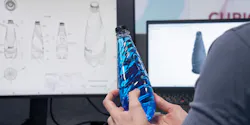
In today’s fast-moving consumer goods (FMCG) and beverage markets, packaging teams are under increasing pressure to be ever more agile, exploring new formats and materials, while also meeting ambitious sustainability targets.
While rapid prototyping has become standard practice, speed alone is no longer enough. Designs must be validated for performance, processability and material efficiency, before significant investment is made.
As development cycles accelerate, the margin for error reduces and assumptions made early in the process carry greater risk. Even where downstream processes appear stable, this can mask underlying variability introduced earlier in production – variability that is not always visible through standard process monitoring.
Hidden variability in injection molding and its impact on SBM
Even with the same stretch blow molding (SBM) bill of materials, differences during injection molding can affect how preforms respond to heating, leading to inconsistencies in the final product.

Even the preforms that fully meet specifications can absorb and distribute heat differently, resulting in varying thermal states entering the stretch process. Variations in packing behavior, material history and cooling can create measurable differences in temperature profile, even when processes appear consistent.
Understanding this challenge, Blow Moulding Technologies (BMT) developed Thermoscan technology to provide full visibility of preform thermal behavior. The system measures both internal and external temperatures along the full length of the preform, capturing a complete thermal profile rather than relying on oven setpoints or surface readings alone.
This makes visible how heat is distributed through the preform wall and allows manufacturers to link upstream injection molding conditions directly to downstream performance, optimizing the injection molding process. In one case, water flow rate was reduced by 18 percent while maintaining consistent temperature distribution.
With this level of insight into material behavior, BMT’s prototyping approach and capabilities help manufacturers make earlier, more informed development decisions by validating design performance, processability and material choices before full-scale production.
SMART prototyping: Combining simulation, lab-scale testing and measurement
To mitigate the impact of upstream conditions on downstream performance, manufacturers are increasingly looking to validate designs earlier in the development cycle to improve efficiency and reduce cost and time. This requires an approach that not only produces physical samples but also captures meaningful process data to support informed decision-making.
To accelerate and de-risk bottle development, BMT's SMART prototyping combines virtual simulation, 3D printed molds and lab-scale stretch blow molding. This approach moves beyond conventional rapid prototyping by delivering production-representative bottles alongside measurable, process-relevant data.
Rather than relying solely on trial-and-error testing and tweaking, manufacturers can generate physical samples while capturing insight into temperature, pressure and material behavior. This enables optimization of preform geometry, material selection and processing parameters early in the development cycle, reducing the likelihood of late-stage modifications before committing to metal tooling.
Early validation is particularly important for brands pursuing lightweighting, increased recycled PET (rPET) content and stronger brand identity, where more complex bottle designs can place additional demands on development and performance.
Looking ahead: Increasing complexity in PET production
As manufacturers bring these data-driven tools into earlier stages of development, attention is also turning to how evolving materials and processes will shape future production. In particular, the greater use of alternative materials is introducing new considerations for consistency and control.
SBM in the PET sector continues to evolve with lightweighting, ambitious design aspirations and the growth of rPET and bio-based materials, which can behave differently from virgin PET. As a result, consistency, sustainability and bottle performance increasingly depend on how precisely manufacturers can manage material behavior throughout the molding process.
At the same time, digital simulation, virtual prototyping and advanced temperature mapping are enabling manufacturers to test and optimize designs without full-scale production trials. As material variability increases, the need for precise, data-driven control becomes more important to maintain consistent production outcomes and support efficient, scalable development.
This article appears in the summer 2026 issue of The Journal of Blow Molding.
© 2026, Society of Plastics Engineers Blow Molding Division
About the Author
David McKelvey
David McKelvey is head of product at BMT (Blow Moulding Technologies), Belfast, Northern Ireland.